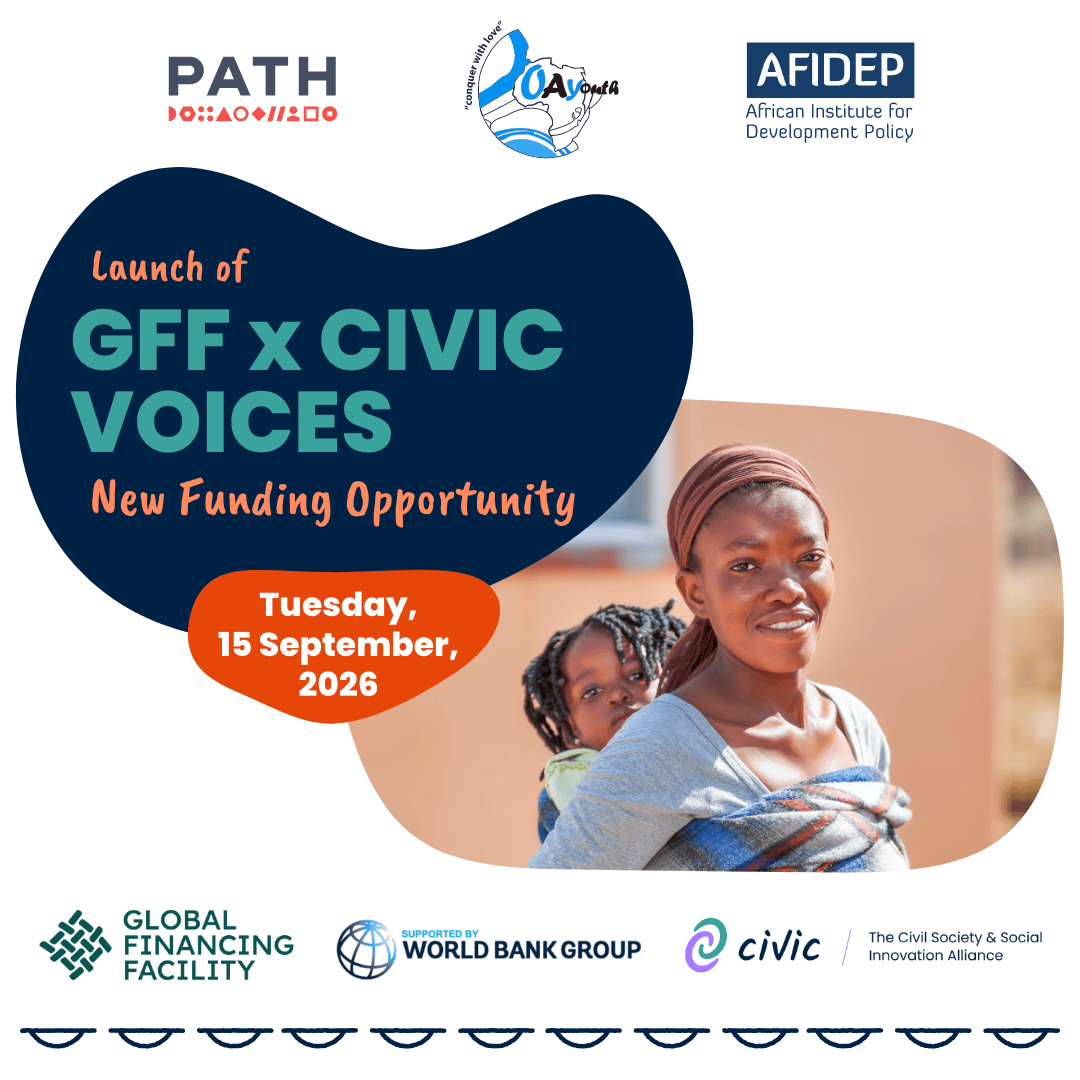
GFF X CIVIC VOICES CALL FOR PROPOSALS 2026.
The GFF x CIVIC VOICES Call for Proposals 2026 is inviting eligible local civil society organizations, youth-led organizations and community-based organizations in 22 African countries, including Nigeria, to form country partnerships that will strengthen civil society engagement, youth leadership, coalition-building and advocacy around domestic health financing.
The initiative is being implemented through the VOICES (Voices Organizing for Inclusive Civic Engagement and Sustainability) consortium, led by PATH in partnership with the African Institute for Development Policy (AFIDEP) and the Organisation of African Youth (OAY).
Through this funding opportunity, up to US$3.35 million will be awarded across up to 22 countries. Selected country partnerships can receive grants for up to 18 months, alongside advocacy training, technical assistance in budget analysis and mentorship.
 ScholarshipsOsj Foundation Undergraduate STEM Scholarship 2026: Full Scholarship, Accommodation and Monthly Stipend at the University of Ibadan.Nov 24, 2026
 ScholarshipsAnfi Foundation Scholarship Fund Program 2027.Nov 24, 2026
 ResourcesHow to Write a Winning Personal Statement for a Scholarship: A Practical Guide with Examples for Students.Nov 23, 2026
 ScholarshipsJim Ovia Foundation Scholarship 2026: How to Get ₦250,000 Annually and Apply Before the Deadline.Nov 23, 2026
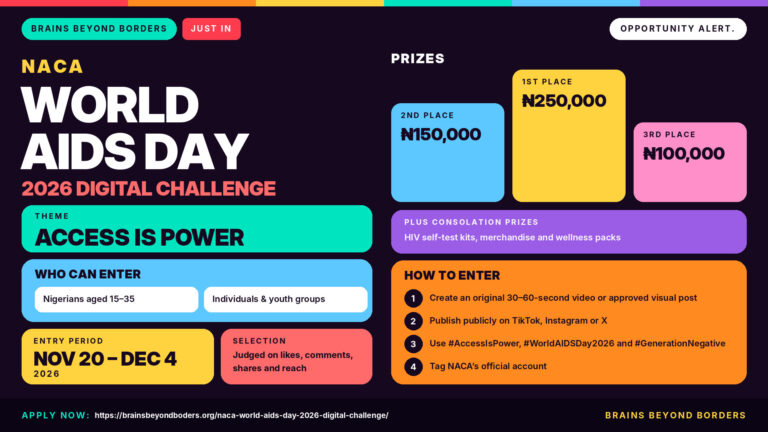 CompetitionsNaca World Aids Day 2026 Digital Challenge: Win ₦250,000 in the Access Is Power Competition.Nov 22, 2026
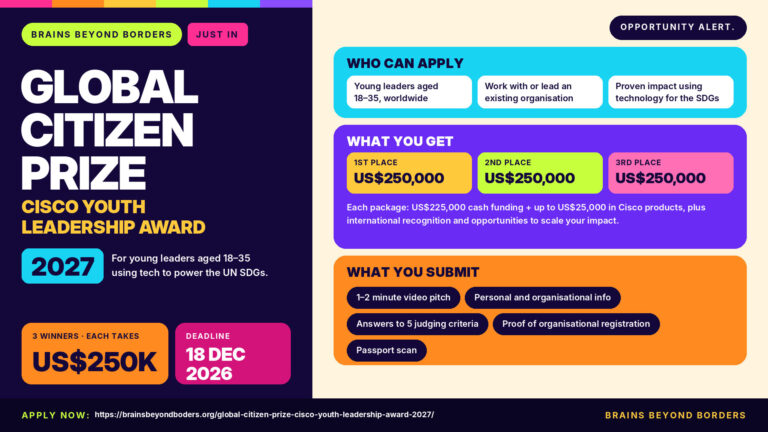 GrantsGlobal Citizen Prize Cisco Youth Leadership Award 2027: Win US$250,000 to Scale Your Impact.Nov 21, 2026
For Nigeria and Kenya, the maximum grant size is US$175,000, while the maximum for the other participating countries is US$150,000.
ABOUT GFF X CIVIC VOICES
The GFF x CIVIC partnership brings together the Global Financing Facility for Women, Children and Adolescents (GFF) and the CIVIC: The Civil Society and Social Innovation Alliance, supported by the World Bank Group.
The VOICES project represents the first pillar of the GFF x CIVIC platform and focuses on strengthening the ability of civil society and youth-led organizations to participate meaningfully in health financing, policy and accountability processes.
The initiative is particularly focused on improving domestic resource mobilization for reproductive, maternal, newborn, child and adolescent health and nutrition (RMNCAH+N).
The programme recognizes that civil society and young people can play an important role in ensuring that government planning, budgeting and health financing decisions reflect community priorities and are subject to meaningful accountability.
PURPOSE OF THE CALL
The purpose of this Call for Proposals is to identify and support local partnerships in each participating country to design and implement coordinated advocacy and civic engagement interventions that contribute to increased domestic investment and accountability for RMNCAH+N.
The programme is therefore not simply a general organizational grant.Successful partnerships will be expected to work collectively to influence health financing, planning, budgeting, policy and accountability processes at national and/or subnational levels.
Only one local partnership is expected to be selected in each country, subject to the quality of proposals received.
PRIORITY AREAS
Proposals must address two interconnected priority areas.
PRIORITY AREA 1: STRENGTHEN CIVIL SOCIETY AND YOUTH ADVOCACY COORDINATION
The first objective focuses on improving coordination and alignment among civil society organizations, youth-led organizations, networks and coalitions working on RMNCAH+N.
Potential activities include:
– Establishing or strengthening coordination mechanisms among relevant CSOs, YLOs, coalitions and networks.
– Developing joint advocacy agendas, messages and action plans.
– Strengthening youth and community participation in domestic resource mobilization processes.
– Supporting community voices, including young people, to influence health policy and financing decisions.
– Building stronger collaboration between organizations working toward related health and nutrition objectives.
PRIORITY AREA 2: ADVOCATE FOR DOMESTIC HEALTH INVESTMENT AND ACCOUNTABILITY
The second objective focuses on advocacy for increased domestic resource investment and accountability for RMNCAH+N.
Potential activities include:
– Advocacy targeting national and/or subnational planning, budgeting and financing processes.
– Engagement with relevant health financing and policy processes.
– Generating and disseminating evidence to support advocacy.
– Participating in government-led policy, planning and accountability platforms.
– Tracking government commitments and health investments.
– Supporting civil society oversight of RMNCAH+N investments.
– Documenting advocacy lessons, good practices and outcomes.
– Contributing to cross-country learning.
The official call emphasizes that these activities should contribute to stronger, more coordinated and evidence-informed advocacy rather than isolated organization-specific projects.
WHO CAN APPLY?
This opportunity is specifically designed for partnerships of local organizations.
An organization cannot apply alone.
Each application must be submitted on behalf of a country partnership consisting of:
– At least 2 local organizations.
– No more than 3 local organizations.
– At least 1 organization must be youth-led.
– All participating organizations must be legally registered and operational in the country where the project will be implemented.
The partners are expected to bring complementary strengths across areas such as advocacy and policy engagement, health financing and budget analysis, youth engagement, community engagement and coalition-building.
WHAT QUALIFIES AS A YOUTH-LED ORGANIZATION?
For this call, a youth-led organization is one in which young people, typically aged 15–35, hold primary leadership, decision-making authority and responsibility for organizational governance and programming.
This makes the youth-led component a substantive requirement rather than simply a requirement to include young people among project beneficiaries.
LEAD ORGANIZATION REQUIREMENT
Each partnership must designate a lead organization.The lead organization will have legal, financial and programmatic responsibility for managing and implementing the grant.
It will receive the grant funds and, where necessary, should have the capacity to subgrant funds to other partnership members.
The lead organization must have at least five years of experience in health financing advocacy and accountability for RMNCAH+N.
Other partner organizations must each have at least three years of relevant experience in health advocacy.This is an important eligibility requirement for organizations considering forming a partnership.
ORGANIZATIONAL REQUIREMENTS
The lead organization must demonstrate appropriate institutional and administrative capacity, including:
– Legal registration and compliance with applicable laws.
– Compliance with statutory obligations and regulatory filings.
– Capacity to enter into contracts and manage grant funds.
– Functional governance and organizational structures.
– Documented operational policies and procedures.
– Institutional continuity and organizational capacity that is not dependent on a single individual.
– Programmes aligned with the organization’s mandate, strategy and national priorities.
– Planning, monitoring, evaluation and learning systems.
– Capacity to track results and report on performance.
– Readiness to undergo due diligence, including a rapid pre-award assessment.
Experience with local authorities or relevant institutions through existing memoranda of understanding or current projects is an added advantage.
FINANCIAL AND GRANT MANAGEMENT REQUIREMENTS
The lead organization is also expected to demonstrate financial management capacity.
This includes:
– Experience managing donor-funded projects transparently.
– A functional financial management and reporting system.
– Effective internal controls and segregation of duties.
– Capacity to prepare and manage project budgets.
– Experience monitoring expenditure against approved plans.
– Evidence of independent external audits and appropriate responses to audit findings.
– Capacity to pre-finance start-up activities where required by the agreed subgranting mechanism.
– Adequate and experienced personnel to implement the proposed activities.
During due diligence, applicants may also be asked to provide documentation confirming their eligibility to receive external or foreign funding.
TECHNICAL AND PROGRAMMATIC EXPERIENCE
Across the partnership, applicants should be able to demonstrate experience in areas such as:
– Advocacy.
– Civic engagement.
– Accountability related to RMNCAH+N.
– Engagement with government institutions and development partners.
– Health policy, planning or budget processes.
– Coalition or network-based work.
– Gender equality.
– Youth engagement and inclusion.
– Community engagement.
– Work involving women, children and young people.
– Engagement with government and local stakeholders on RMNCAH+N.
Active participation in relevant national platforms, coalitions, multi-stakeholder platforms or Ministry of Health technical working groups is an added advantage.
Applicants should also be able to demonstrate their programming and impact through materials such as programme reports, annual workplans and budgets from the previous two years.
ELIGIBLE COUNTRIES
The call is open to organizations operating in the following 22 African countries:
– Burkina Faso
– Cameroon
– Central African Republic
– Chad- Côte d’Ivoire
– Democratic Republic of the Congo
– Ethiopia
– Ghana
– Guinea
– Kenya
– Liberia
– Malawi
– Mali
– Mozambique
– Nigeria
– Rwanda
– Senegal
– Sierra Leone
– Tanzania
– Uganda
– Zambia
– Zimbabwe
Nigeria is therefore one of the eligible countries.
FUNDING AVAILABLE
The total funding envelope is US$3,350,000 across up to 22 countries.
The official call anticipates one grant in each participating country, although the final number of awards depends on the quality of proposals received.
MAXIMUM GRANT AMOUNTS
• For Nigeria and Kenya: Up to US$175,000 per award.
• For the other participating countries: Up to US$150,000 per award.
The grants can run for up to 18 months.
The proposed award start date is November 30, 2026, subject to the programme’s final arrangements.
ADDITIONAL SUPPORT FOR SELECTED PARTNERSHIPS
Financial support is not the only component of the opportunity.
Selected partnerships will also receive support that includes:
– Advocacy training.
– Technical assistance in budget analysis.
– Mentorship.
– Support to strengthen advocacy plans.
– Opportunities for cross-country learning.
– Capacity strengthening around health financing and accountability.
The programme is designed to help organizations move from fragmented, organization-led activities toward more sustained coalition-driven advocacy within formal decision-making spaces.
WHAT WILL SUCCESSFUL PARTNERSHIPS WORK ON?
Successful partnerships will be expected to develop coordinated advocacy and civic engagement interventions relevant to their country’s context.
This could involve working to:
– Influence health financing decisions.
– Strengthen participation in planning and budgeting processes.
– Improve accountability for health investments.
– Generate and use evidence for advocacy.
– Strengthen youth participation in decision-making.
– Elevate community perspectives.
– Track government commitments.
– Engage with relevant government and multi-stakeholder platforms.
– Document and share lessons from advocacy activities.
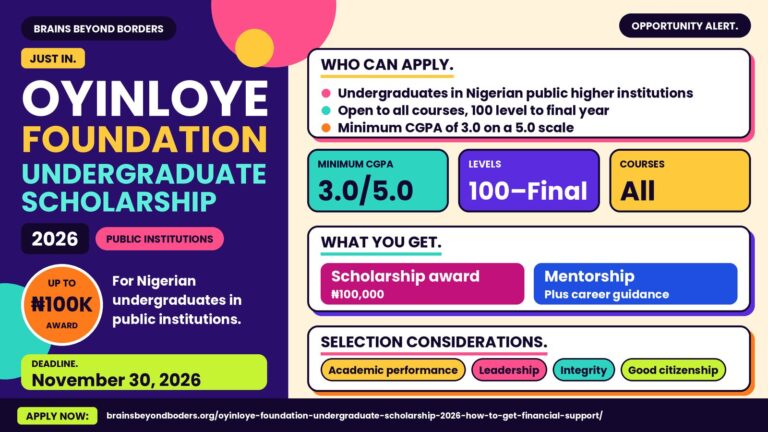 ScholarshipsOyinloye Foundation Undergraduate Scholarship 2026: How to Get ₦100,000 in Financial Support.Nov 21, 2026
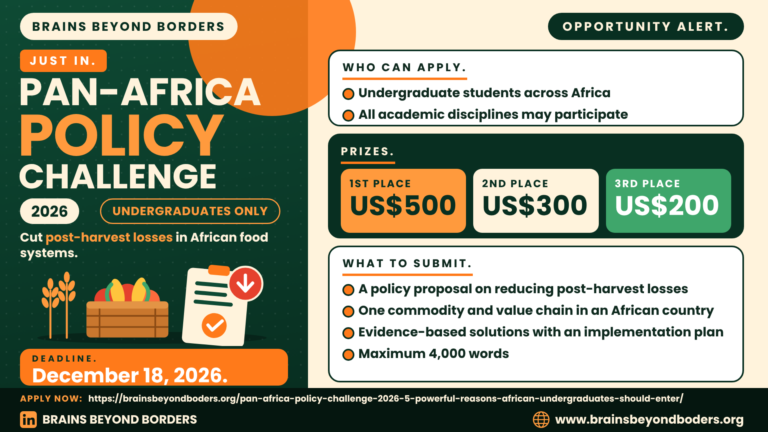 DuelsPan-Africa Policy Challenge 2026: 5 Powerful Reasons African Undergraduates Should Enter.Nov 21, 2026
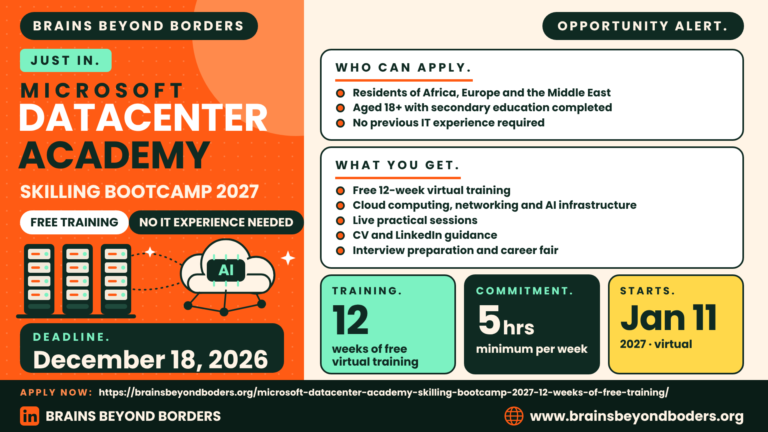 AI ToolsMicrosoft Datacenter Academy Skilling Bootcamp 2027: 12 Weeks of Free Training in Cloud Computing, AI Infrastructure and Networking.Nov 20, 2026
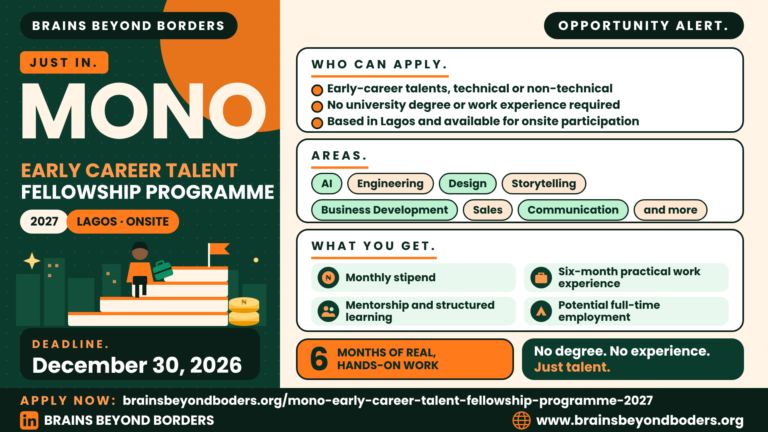 FellowshipsMono Early Career Talent Fellowship Programme 2027: Apply for a 6-Month Fellowship with Monthly Stipend in Lagos.Nov 20, 2026
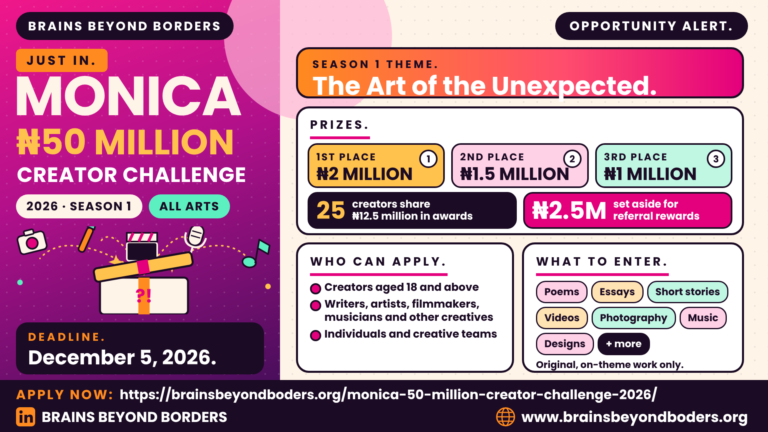 DuelsMonica ₦50 Million Creator Challenge 2026: The Guide for You to Apply and Win .Nov 20, 2026
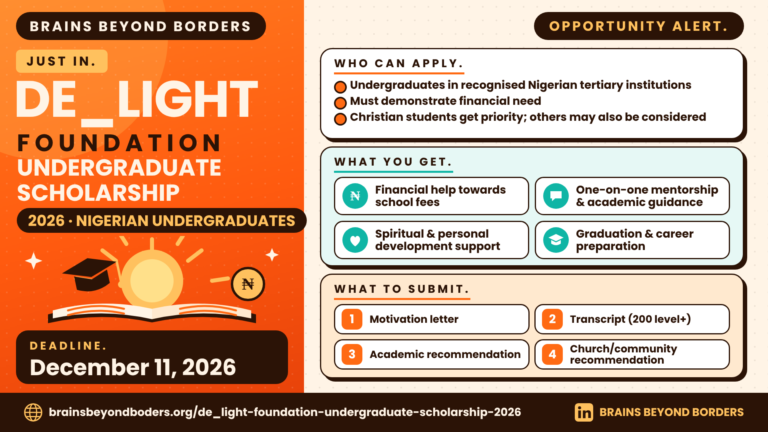 ScholarshipsDe_Light Foundation Undergraduate Scholarship 2026: Financial Support and Mentorship for Nigerian Students.Nov 18, 2026
For Nigeria, the official call specifically indicates that proposals should include subnational advocacy engagement, reflecting the country’s decentralized health budget structure.
APPLICATION DOCUMENTS
Applicants are required to submit several documents.The application package includes:
1. Completed Technical Proposal Submission Template
This must be submitted as a Word document.
2. High-Level Budget
Applicants must use the provided budgeting template and submit it as an Excel document.
3. Proof of Legal Registration; Documentation is required for each member of the partnership and should be submitted as PDF or JPEG files.
4. Budget Verification for the Lead Organization; This should be submitted as a PDF or JPEG.
5. Organizational Organogram
An organogram should be provided for all partnership members where possible, in PDF or JPEG format.
Applicants should use the official templates provided by PATH rather than creating their own substitute formats.
HOW TO APPLY
The official application process is completed by email.
Applicants should first review the official Call for Proposals, Frequently Asked Questions, Technical Proposal Submission Template and Budgeting Template.
The partnership should then:
1. Confirm that all participating organizations meet the eligibility requirements.
2. Designate the lead organization.
3. Develop the proposed advocacy and civic engagement intervention.
4. Complete the official technical proposal template.
5. Prepare the high-level budget using the official budgeting template.
6. Gather proof of legal registration for all partnership members.
7. Prepare the lead organization’s budget verification.
8. Prepare the organizational organograms.
9. Review all documents for completeness and compliance with the prescribed formats.
10. Submit the complete application by email.
APPLICATION SUBMISSION EMAIL
All application documents should be submitted to: [email protected]
Applicants will receive an automated response confirming receipt of the email.
If necessary, PDF and JPEG attachments may be sent in a separate email, but the total size of attachments should not exceed 150 MB.
APPLICATION LANGUAGES
Applications may be submitted in:
– English.
– French.
– Portuguese.
The official call and supporting materials are also available in these languages.
HOW APPLICATIONS WILL BE EVALUATED
Proposals will undergo an eligibility screening, technical assessment and final selection process.
The published evaluation criteria include:
– Relevance and strategic focus of the proposed approach — 25%.
– Advocacy experience and capacity of the partnership — 25%.
– Cost-effectiveness and realism of the proposed budget — 10%.
– Financial and grant management capacity — 10%.
– Integration of social equity and gender considerations — 10%.
– Sustainability — 10%.
– Innovation — 10%.
This means applicants need to demonstrate not only a strong idea but also the organizational and partnership capacity to implement it effectively.
IMPORTANT PARTNERSHIP RESTRICTION
An organization can participate in only one LCYO country partnership application under this call.
Organizations should therefore carefully choose their partners before submitting a proposal.
In addition, CSOs and youth-led organizations selected for a grant under Pillar 1 will not be eligible to receive funding under Pillar 2 of the GFF x CIVIC funding opportunity.
KEY DATES
The Call for Proposals was released on September 15, 2026.
The deadline for submitting clarification questions was September 21, 2026, with responses scheduled for September 25.
The final proposal submission deadline is: October 7, 2026 at 23:59 East Africa Time (EAT).
The targeted evaluation date is October 27, 2026.
The public announcement of selected country partnerships is targeted for November 30, 2026.
The VOICES consortium reserves the right to modify the schedule, with applicants to be notified of any changes.
IMPORTANT INFORMATION FOR APPLICANTS
This opportunity is particularly important for established organizations because the eligibility requirements go beyond simply being registered as an NGO or youth organization.
A prospective partnership should carefully verify its collective experience before investing time in preparing a proposal.
In particular:
– The application cannot be submitted by one organization alone.
– The partnership must contain 2–3 local organizations.
– At least one partner must be youth-led.
– The lead organization needs at least five years of relevant health financing advocacy and RMNCAH+N accountability experience.
– Other partners need at least three years of relevant health advocacy experience.
– All partners must be legally registered and operational in the implementation country.
– The proposal must focus on advocacy, civic engagement, domestic resource mobilization and accountability for RMNCAH+N.
– Nigerian proposals should include subnational advocacy engagement.
– Applicants must use the prescribed technical and budget templates.
– The application must be submitted by email to [email protected].
– The deadline is October 7, 2026 at 23:59 EAT.
Applicants should also read the updated official FAQ before submitting, as it provides additional clarification on eligibility, partnership composition, funding, budgeting and the application process.
OFFICIAL APPLICATION RESOURCES
• Access The Official Call for Proposals HERE.
• Access Funding Opportunity Resources, including the official Call for Proposals, Budgeting Template, Technical Proposal Submission Template and FAQ HERE.
• Application email: [email protected] deadline:October 7, 2026 at 23:59 East Africa Time.
[bbp_banner]