HOW TO WRITE A WINNING PERSONAL STATEMENT FOR A SCHOLARSHIP: A PRACTICAL GUIDE WITH EXAMPLES FOR STUDENTS.
Your personal statement could be one of the most important documents in your scholarship application, yet, it is also one of the documents many students struggle to get right.
You may have excellent grades, leadership experience, impressive extracurricular activities and a genuine need for financial assistance. You may even meet every eligibility requirement for a scholarship, but when you are asked to explain who you are, what motivates you, what you have accomplished and why you deserve the opportunity, you suddenly find yourself staring at a blank page.
What exactly should you write?
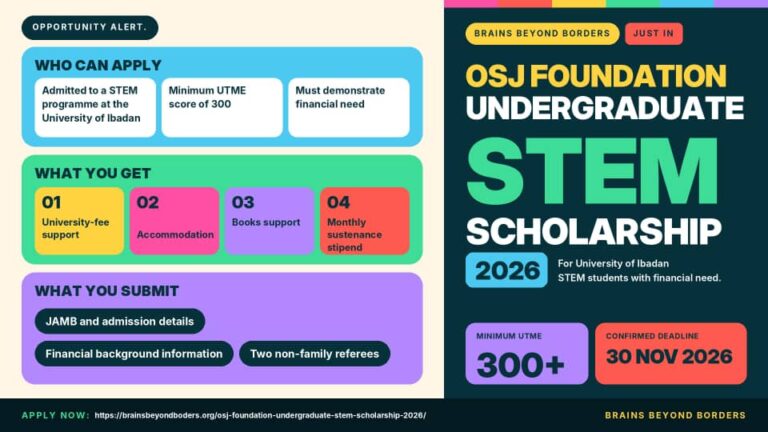 ScholarshipsOsj Foundation Undergraduate STEM Scholarship 2026: Full Scholarship, Accommodation and Monthly Stipend at the University of Ibadan.Nov 24, 2026
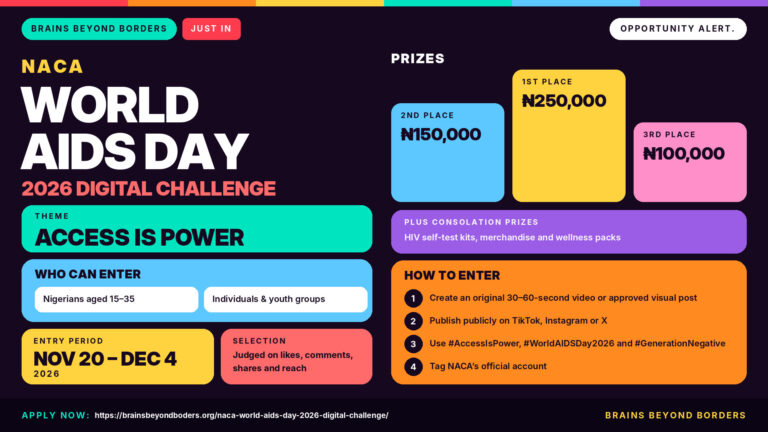 CompetitionsNaca World Aids Day 2026 Digital Challenge: Win ₦250,000 in the Access Is Power Competition.Nov 22, 2026
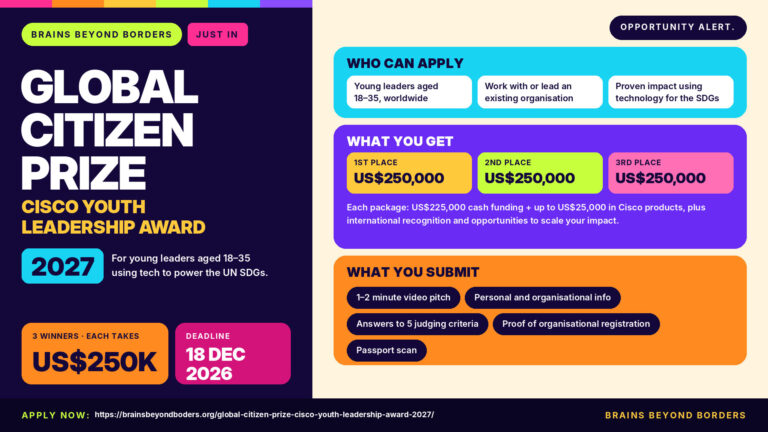 GrantsGlobal Citizen Prize Cisco Youth Leadership Award 2027: Win US$250,000 to Scale Your Impact.Nov 21, 2026
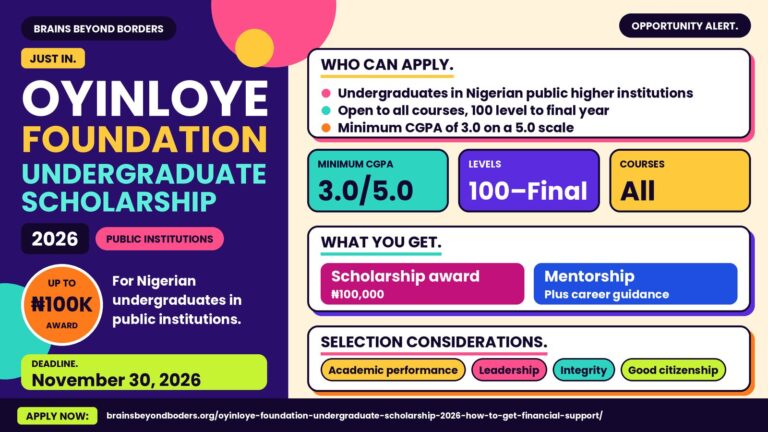 ScholarshipsOyinloye Foundation Undergraduate Scholarship 2026: How to Get ₦100,000 in Financial Support.Nov 21, 2026
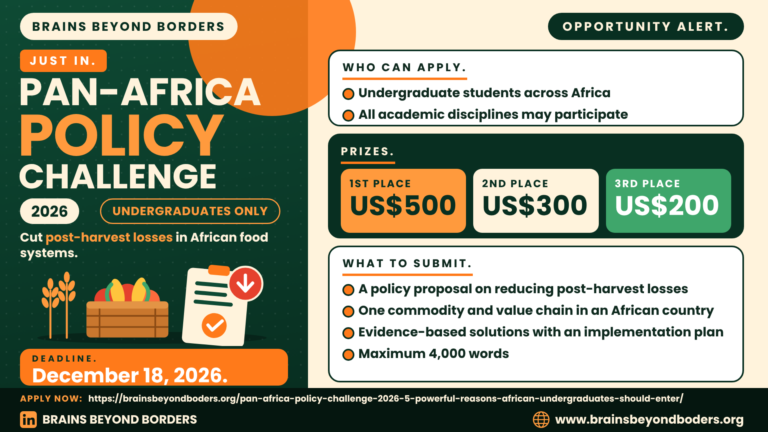 DuelsPan-Africa Policy Challenge 2026: 5 Powerful Reasons African Undergraduates Should Enter.Nov 21, 2026
 AI ToolsMicrosoft Datacenter Academy Skilling Bootcamp 2027: 12 Weeks of Free Training in Cloud Computing, AI Infrastructure and Networking.Nov 20, 2026
Should you begin with your childhood?
Should you explain your financial circumstances?
Should you list your achievements?
Should you talk about your dreams?
And how do you make your statement stand out when hundreds or thousands of other students are applying for the same scholarship?
These are important questions, and getting the answers right can make a meaningful difference to the quality of your application.
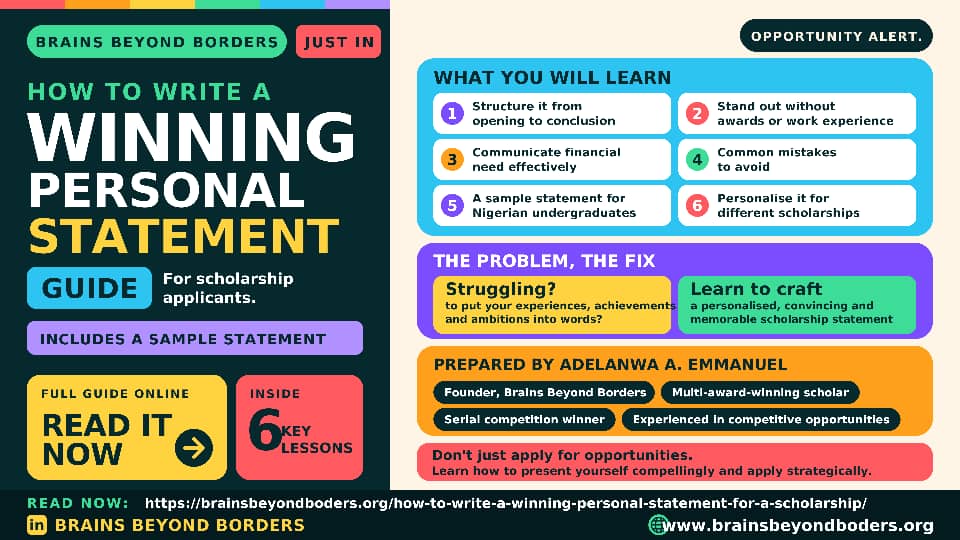
This guide, by our very wonderful founder and team lead, Adelanwa Emmanuel O. explains how to write a winning personal statement for a scholarship, with some practical examples he has experimented that has worked for him in several scholarships scenarios, a step-by-step writing framework, useful questions to ask yourself and an ‘illustrative’ personal statement you can learn from.
Whether you are a 100-level undergraduate applying for your first scholarship, a final-year student seeking financial assistance, or a Nigerian student pursuing international scholarship opportunities, this guide will help you communicate your story more effectively.
The objective is not to teach you how to manufacture an impressive identity. It is to help you present the experiences, abilities, circumstances and ambitions you genuinely possess in a way that makes sense to the scholarship provider.
First, what is a personal statement for a scholarship?

A personal statement is a written account of who you are, what has shaped your academic and personal journey, what you hope to achieve and why you are a suitable candidate for a particular opportunity.
In a scholarship application, it gives the selection committee an opportunity to understand the person behind the academic records, certificates, recommendation letters and other application documents.
Think about it this way: your transcript may show your academic performance, while your CV may list your leadership positions and achievements. Your personal statement should help the committee understand the person behind those records.
It should communicate:
• Who you are and what matters to you.
• The experiences that have influenced your educational journey.- Your academic interests and ambitions.
• The challenges you have encountered, where relevant.
• The contributions you have made to your community or environment.
• What you intend to accomplish in the future.
• Why the particular scholarship aligns with your goals.
The University of California, Davis, explains that a personal statement helps scholarship readers understand an applicant’s personality, distinguishing qualities, intellectual achievements and circumstances beyond the classroom. It can add meaning to information already provided elsewhere in an application.
This is why you should not treat your personal statement as another version of your CV. Your CV tells the committee what you have done. Your personal statement helps it understand why those experiences matter and what they reveal about you.
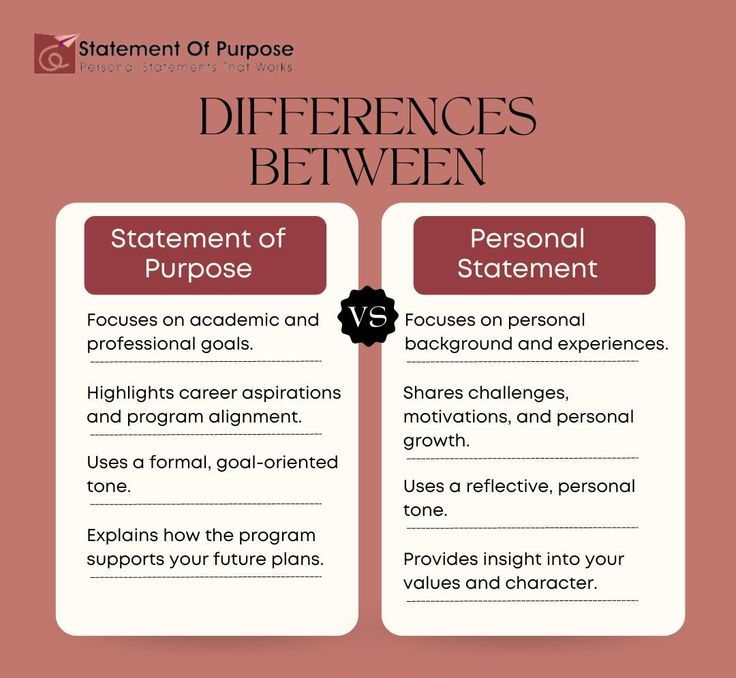
What is the difference between a personal statement, a motivation letter and a statement of purpose?
These terms are sometimes used interchangeably, but they do not always mean exactly the same thing.
Understanding the distinction will help you respond to the actual requirements of a scholarship instead of submitting a document that answers the wrong question.
1. Personal statement.
A personal statement focuses on you as an individual. It explores your background, experiences, interests, values, achievements, challenges, motivations and future ambitions.
The central question is:
Who are you, what has shaped you, and what should the selection committee understand about your journey?
2. Motivation letter.
A motivation letter places greater emphasis on why you want a particular opportunity.
It explains your interest in the scholarship, your reasons for applying, how the opportunity connects with your goals and what you hope to gain from it.
The central question is:
Why are you applying for this particular scholarship, and why does it matter to your goals?
3. Statement of purpose.
A statement of purpose is often more focused on your academic direction, professional interests, intended area of study or research and long-term objectives.
It is particularly common in postgraduate and specialised academic applications.
The central question is:
What do you intend to study or accomplish, why have you chosen that direction, and how does this programme fit into your plans?
These distinctions are useful, but scholarship providers do not always follow identical definitions. Some use the term personal statement for a document that includes motivation, academic goals and financial circumstances.
Your most important rule is to follow the exact application prompt. If the scholarship asks for a motivation letter, do not submit a generic personal statement simply because the two documents have similarities.
What makes a scholarship personal statement stand out?
To be very honest with you as an individual who has won several scholarships and tug of words competitions, there is no universal formula that guarantees a scholarship award. Selection committees differ, and the requirements of one scholarship may be very different from those of another.
However, strong personal statements generally communicate several important qualities.
1. Authenticity.
Your statement should sound like a genuine account of your experiences and ambitions. Avoid inventing achievements, exaggerating your responsibilities or presenting yourself as someone you are not. You do not need to manufacture an extraordinary life story to produce a compelling personal statement. Your actual experiences, when communicated thoughtfully, can provide enough material.
2. Specificity.
General claims are difficult for readers to evaluate.
For example:
Weak:
“I am passionate about leadership and community development.”
Stronger:
“During my time as a departmental class representative, I helped coordinate communication between students and lecturers and organised a peer-support arrangement for classmates preparing for examinations.”
The second example gives the reader something concrete to understand and assess. Only use examples that accurately reflect your own experience.
3. Reflection.
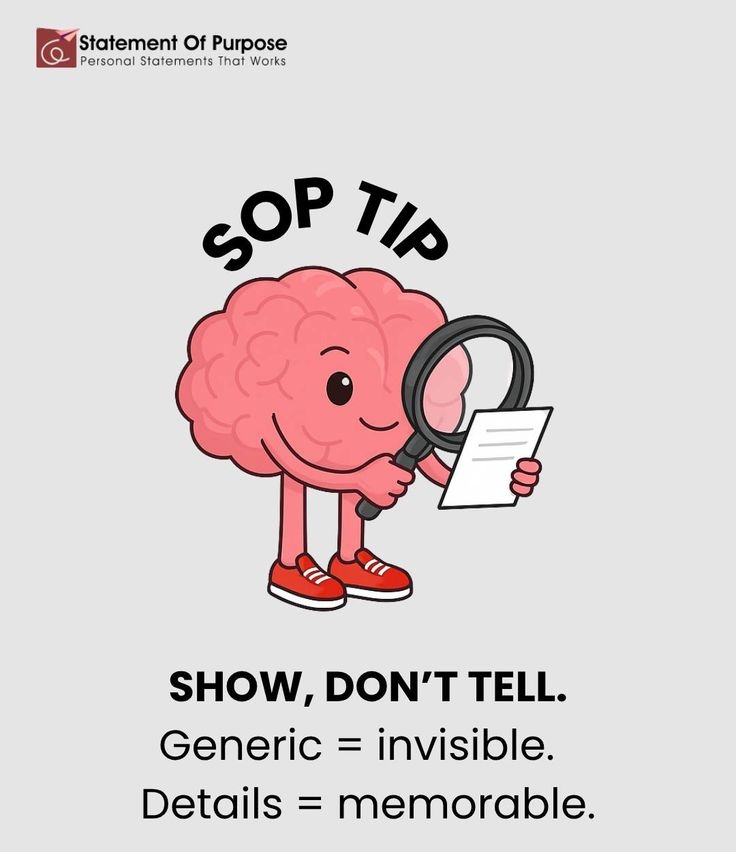
Do not merely describe what happened. Do more of showing than telling. Explain what you learned, how it influenced you and how it connects with your present goals.
An experience becomes more meaningful when you can explain what it taught you.
4. Clear direction.
Your personal statement should communicate a sense of purpose. You do not need to have every aspect of your future figured out. However, the committee should understand what you are working towards and why your education matters to you.
5. Relevance to the scholarship.
A strong statement is not simply impressive in isolation. It should also respond to the purpose and priorities of the particular scholarship. Research the organisation, its mission, the type of students it supports and the specific qualities it seeks.
The University of Maryland’s National Scholarships Office similarly recommends establishing a clear central theme, using specific examples, understanding the audience and avoiding a simple prose reproduction of your CV.
How to write a winning personal statement for a scholarship: 9 practical steps!
Now, let’s get ourselves into the actual writing process.
Before you start drafting, understand that the strongest personal statements are rarely produced by sitting down and immediately writing from the first sentence to the last.
You need to think, organise your experiences, identify your central message and determine which information is most relevant to the scholarship.
Here is a practical process you can follow.
Step 1: Understand the scholarship before writing anything.
This is where many students make their first mistake. They write one personal statement, save it on their phones and submit the same document to every scholarship they encounter. That approach may save time, but it can make your application appear generic.
Before writing, investigate the scholarship.
Find answers to these questions:
• Who established the scholarship?
• What is the organisation trying to achieve?
• Who is the scholarship designed to support?
• Is it primarily based on academic excellence, financial need, leadership, community service or a combination of these?
• What qualities does the selection committee appear to value?
• What specific question does the application ask you to answer?
• Is there a word limit or formatting requirement?
For example, imagine two different scholarships.
Scholarship A prioritises academically outstanding students with demonstrated financial need.
Scholarship B supports young people who have demonstrated leadership and a commitment to solving community problems.
You may be eligible for both, but your personal statements should not have exactly the same emphasis.
For Scholarship A, you may need to explain your academic commitment, financial circumstances and how the award would support your education.
For Scholarship B, you may need to demonstrate how you identified a problem, took initiative, involved other people and contributed to a meaningful outcome.
Your experiences can remain the same. The way you connect those experiences to each opportunity would however change. Why? Simply because they are two different scholarships!
Step 2: Discover the central message of your story.
Before writing, ask yourself:
If the selection committee remembers only one important thing about me after reading my statement, what should it be?
This is your central message.
It could be your commitment to improving access to education, your determination to pursue a particular profession, your interest in solving a community problem or the relationship between your academic interests and long-term ambitions.
Your statement should have a clear theme that connects its different sections.
Consider this example: A student studying agriculture may have grown up in a farming community, witnessed challenges affecting smallholder farmers, developed an interest in agricultural technology and volunteered in a local agricultural initiative.
Instead of presenting these as unrelated experiences, the student could build the statement around one central message:
“I want to use agricultural knowledge and innovation to improve the productivity and economic opportunities of smallholder farmers.”
Now, the student’s background, academic interests, experiences and future ambitions have a common direction.
This is what gives a personal statement coherence.
Step 3: Build your personal story bank.
One of the biggest reasons students struggle with personal statements is that they do not know what information to include.
They assume they need major awards, international recognition, extensive volunteering experience or an impressive leadership position before they can write something meaningful.
That is not necessarily true.
Your experiences may include things you have never considered important enough to mention.
Before drafting, create a personal story bank. This is simply a collection of experiences, responsibilities, achievements, challenges and lessons that could help explain who you are.
Consider the following areas.
A. Your educational journey.
• Why did you choose your course?
• What subjects or areas interest you most?
• Have you overcome any academic difficulties?
• Have you demonstrated consistent academic commitment?
• Have you pursued learning outside your formal curriculum?
B. Your personal background.
• What circumstances have influenced your education?
• What responsibilities have you handled?
• Have you had to make difficult decisions to continue your studies?
• What values did your upbringing teach you?
C. Your leadership and extracurricular experiences.
• Have you led a student group or organised an activity?
• Have you volunteered for a cause?
• Have you mentored or supported other students?
• Have you participated in competitions or community projects?
• Have you taken initiative without holding a formal leadership position?
D. Your achievements.
• Have you won an award?
• Have you received recognition for your work?
• Have you completed a meaningful project?
• Have you demonstrated excellence in academics, sports, creativity or service?
E. Your ambitions.
• What do you want to accomplish?
• What problem do you hope to address?
• How does your chosen course prepare you for that goal?
• What difference would you like to make in your community or profession?
Write down your answers before deciding what belongs in the final statement.
You may discover that you have more useful experiences than you initially thought.
Step 4: Choose experiences that demonstrate your qualities.
Having a long list of experiences does not mean you should include every item.
Your task is to identify the experiences that best support the central message of your statement.
For example, imagine you want to demonstrate leadership.
You could write: “I possess excellent leadership skills and have always been passionate about helping others.”
But what evidence supports that claim?
Perhaps you coordinated a study group, organised a community clean-up, helped younger students prepare for examinations or volunteered to manage a project.
Choose the experience that most clearly demonstrates the quality you want the committee to recognise.
A useful approach is to explain:
1. The situation: What was happening?
2. Your responsibility: What did you need to do?
3. Your action: What did you personally contribute?
4. The outcome: What happened as a result?
5. Your reflection: What did the experience teach you?
This resembles the widely used Situation, Task, Action and Result approach, with an additional emphasis on personal reflection.
For instance:
“After noticing that some students in my department struggled to understand introductory mathematics, I joined a small peer-learning group that organised informal revision sessions. I helped explain difficult topics and encouraged participants to practise questions together. The experience strengthened my communication skills and showed me how accessible peer support can improve the learning environment.”
This is more useful than simply saying you are passionate about education.
The important point is to describe your actual contribution accurately. Do not claim that you established a programme or produced a particular result if you were only a participant.
Step 5: Explain your challenges without making your entire statement a hardship narrative.
This is particularly important for students applying for need-based scholarships.
You may come from a financially disadvantaged household. Your parents may struggle to meet your educational expenses. You may have faced difficulties paying school fees, purchasing textbooks, accessing learning materials or managing other academic costs.
These circumstances can be relevant to your application, particularly when the scholarship considers financial need. However, there is a difference between explaining your circumstances and making your entire personal statement a catalogue of difficulties.
A strong personal statement should communicate more than what you have experienced. It should also explain how those experiences have influenced your decisions, priorities and ambitions.
Consider the difference.
Less effective:
“My family is very poor. My parents cannot afford my education, and I have suffered many difficulties. I desperately need this scholarship because I cannot continue without financial assistance.”
More effective:
“My family’s financial circumstances have made financing my education a persistent challenge. I have therefore had to approach my academic responsibilities with careful planning and a strong awareness of the sacrifices required to remain in school. Receiving this scholarship would ease some of the financial pressure on my education and allow me to devote greater attention to my academic development.”
The second example communicates financial need without relying on emotional pressure. If the scholarship specifically asks about financial circumstances, be sufficiently detailed and truthful. Where the application requests supporting evidence, provide it.You do not need to exaggerate your difficulties to prove that you deserve support.
Step 6: Connect your past experiences to your future ambitions.
Your personal statement should not leave the reader wondering what you intend to do with your education. Explain how your academic interests, experiences and ambitions connect. For example, a student studying public health might explain an interest in improving access to preventive healthcare after observing gaps in health education within their community. A computer science student might describe an interest in building accessible digital tools after experiencing the limitations of existing educational resources.
An education student might explain how their experiences supporting younger learners influenced their interest in improving teaching and learning outcomes.
Notice the structure:
• An experience influenced an interest.
• The interest shaped an academic or professional direction.
• The chosen course provides relevant knowledge and skills.
• The student intends to apply those skills to a meaningful goal.
our ambitions should be realistic enough to explain and specific enough to be understood.You do not have to promise to transform an entire country immediately after graduation. Explain the contribution you genuinely hope to make and the steps you intend to take towards it.
Step 7: Explain why you need this particular scholarship.
This is where personalisation becomes especially important. A personal statement that could be submitted unchanged to ten different scholarship programmes is probably not sufficiently tailored.
Explain why the particular scholarship is relevant to your circumstances and ambitions.You should understand:
• What the scholarship supports.
• Why its objectives matter to you.
• How the financial or academic support would help.
• Whether its mentorship, networking or development opportunities are relevant to your goals.
• What you would bring to the programme or community.
For example, if a scholarship offers both financial assistance and professional mentorship, do not discuss only the money. You could explain how the financial assistance would reduce the pressure of educational expenses, while the mentorship would help you develop a clearer understanding of your intended career path.
Be specific, but do not flatter the organisation with exaggerated praise. The objective is to demonstrate a genuine connection between what the scholarship offers and what you need to accomplish.

Step 8: Draft your personal statement using a clear structure.
Once you have identified your central message and selected your strongest experiences, you can begin writing.
A useful structure for many undergraduate scholarship personal statements is outlined below.
Opening paragraph: Introduce yourself and establish your central theme.
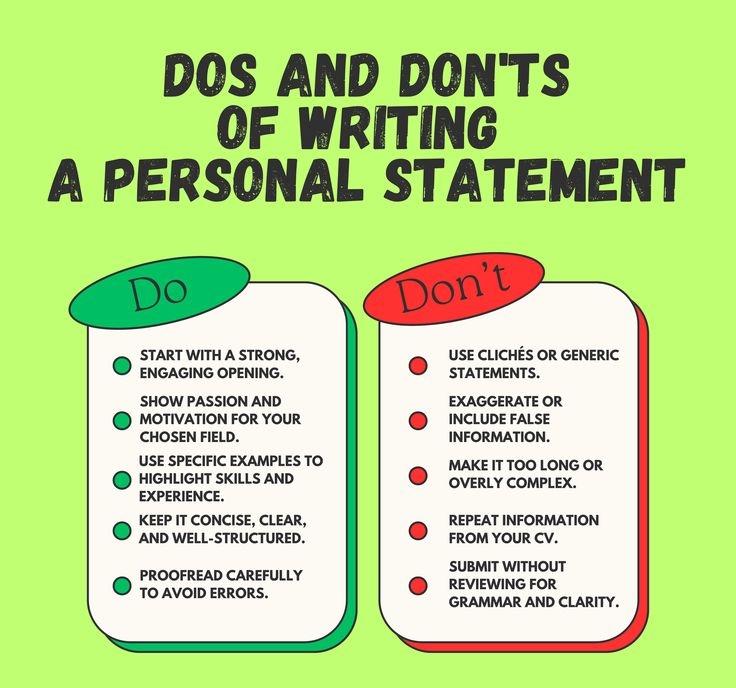
Your opening should give the reader a reason to continue.You can begin with a meaningful experience, an important observation, a personal motivation or a defining interest. Avoid openings that are unnecessarily dramatic or filled with quotations.
For example: “Growing up in a community where access to quality educational resources was limited shaped my understanding of how strongly opportunity can influence a student’s future. It also influenced my interest in education and my commitment to helping other young people access learning opportunities.”
This opening introduces a personal perspective and establishes a theme. Only use an opening like this if it genuinely reflects your experience.
Second paragraph: Explain your background and educational journey.
Give the reader relevant context about your background. Explain your educational interests, why you chose your course and the experiences that have influenced your academic direction. You do not need to provide a complete account of your childhood. Include only details that help the reader understand your present ambitions.
Third paragraph: Demonstrate your achievements, skills and experiences.
Choose relevant examples of academic commitment, leadership, volunteering, competitions, projects or other responsibilities. Do not simply list achievements.
Explain what you did, what you learned and how the experience influenced your development.
Fourth paragraph: Discuss challenges and financial need, where relevant.
If the scholarship considers financial need, explain your circumstances honestly.
Show how the situation affects your education and why the support would make a meaningful difference. If financial need is not part of the selection criteria, do not force an unrelated hardship narrative into your statement.
Fifth paragraph: Explain your goals and intended contribution.
Discuss your academic, professional or community ambitions.
Show how your education connects to those goals and what you hope to contribute in the future.
Final paragraph: Establish why the scholarship matters.
Bring your story together. Explain why this particular opportunity is relevant, how you intend to use it and what you hope to accomplish. End with a confident, thoughtful statement rather than a desperate plea.
This is a flexible framework, not a compulsory six-paragraph formula. If the scholarship provides specific questions, headings or a different format, follow those instructions instead.
Step 9: Edit, review and personalise before submitting.
Your first draft should not automatically become your final submission.
Read it again and examine every paragraph.
Ask yourself:
• Does this statement answer the actual scholarship prompt?- Does it sound like my genuine experience?
• Have I provided evidence for my claims?
• Does every paragraph contribute to my central message?
• Have I explained why this particular scholarship matters?
• Have I avoided repeating information already presented in my CV?
• Have I stayed within the word limit?
• Have I checked spelling, grammar and punctuation?
• Can I confidently explain every statement I have made?
Ask a trusted lecturer, mentor or knowledgeable person to review the document if possible. The University of California, Davis recommends starting early, organising the statement clearly, using specific examples and allowing sufficient time for multiple revisions.
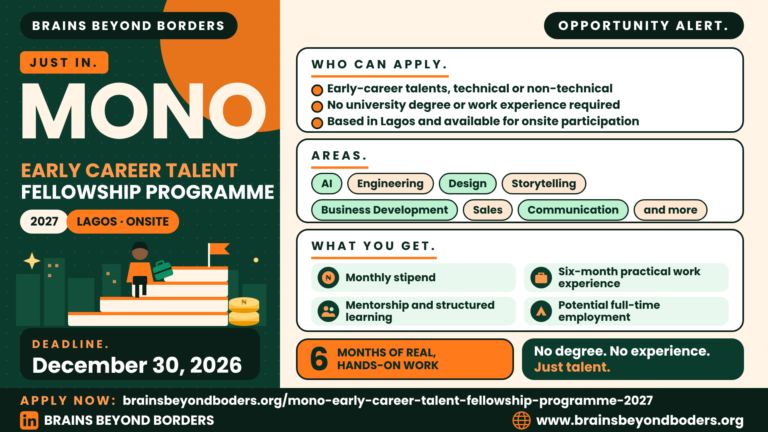 FellowshipsMono Early Career Talent Fellowship Programme 2027: Apply for a 6-Month Fellowship with Monthly Stipend in Lagos.Nov 20, 2026
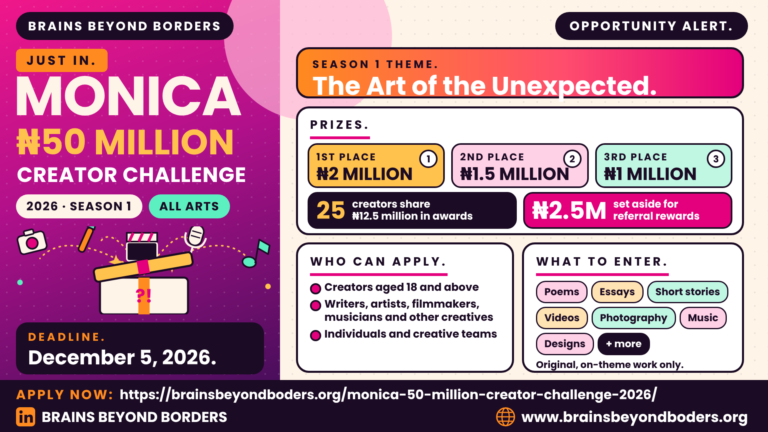 DuelsMonica ₦50 Million Creator Challenge 2026: The Guide for You to Apply and Win .Nov 20, 2026
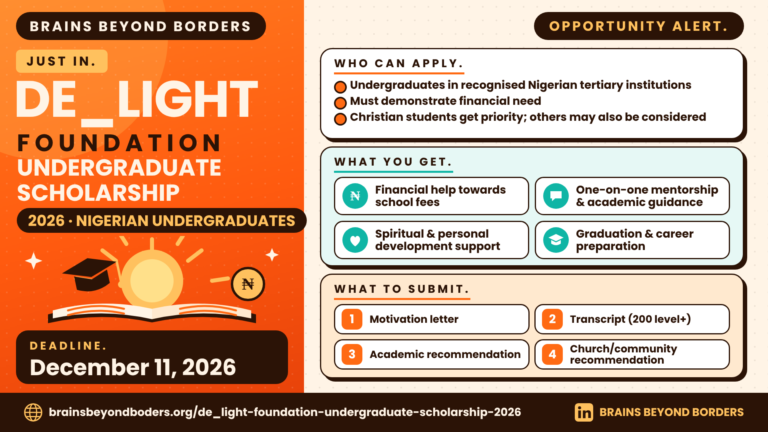 ScholarshipsDe_Light Foundation Undergraduate Scholarship 2026: Financial Support and Mentorship for Nigerian Students.Nov 18, 2026
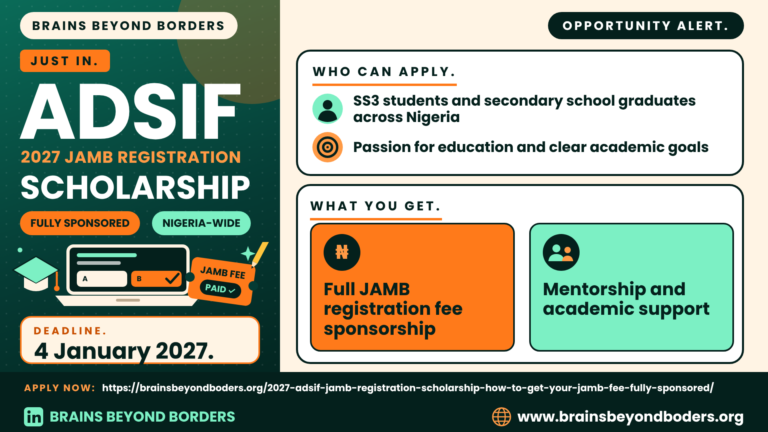 Scholarships2027 ADSIF JAMB Registration Scholarship: How to Get Your JAMB Fee Fully Sponsored.Nov 18, 2026
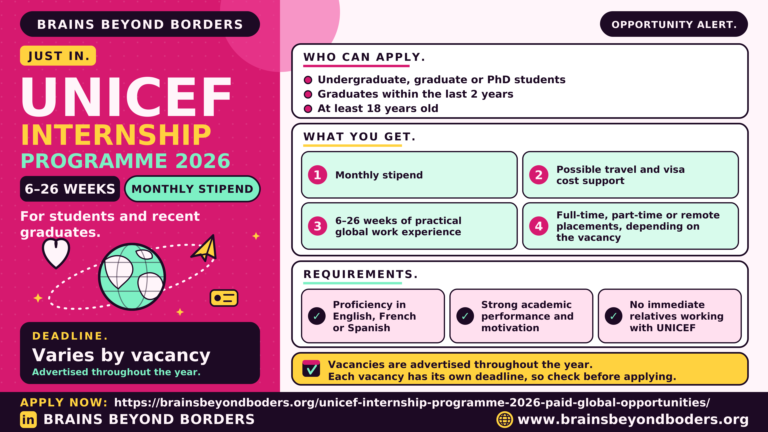 Research & Internships ( Fully Funded )UNICEF Internship Programme 2026: Paid Global Opportunities for Students and Recent Graduates.Nov 18, 2026
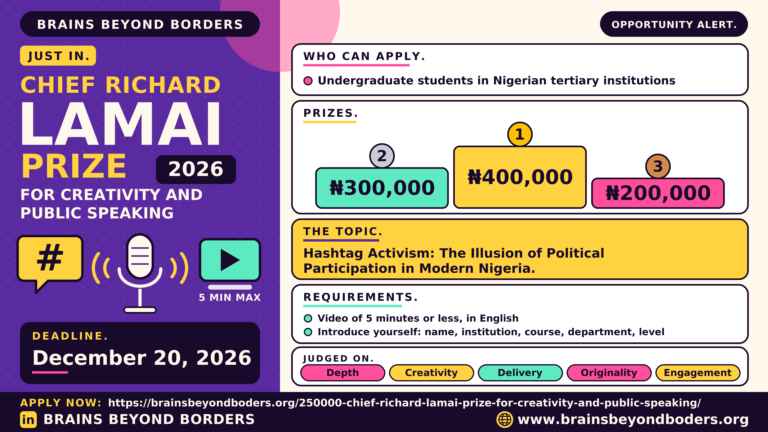 Competitions₦250,000 Chief Richard Lamai Prize for Creativity and Public Speaking 2026: How to Enter the 5-Minute Video Competition.Nov 18, 2026
How do you write a personal statement when you have no awards or work experience?
This is one of the most common concerns among undergraduate students.
You may be in your first year of university. You may never have held an executive position in a student organisation. You may not have won a national competition or participated in a formal internship.
Does that mean you have nothing meaningful to write about?
No.
A personal statement is not an awards catalogue.
Scholarship committees may want to understand your potential, motivation, academic interests, character and commitment, not simply count the number of certificates you possess.
Consider experiences such as:
• Helping younger students understand difficult subjects.
• Participating in a class or departmental project.
• Taking responsibility for a family or community activity.
• Learning a useful skill independently.
• Supporting a local initiative.
• Participating in a school competition.
• Maintaining academic commitment despite difficult circumstances.
• Taking initiative to solve a problem around you.
• Developing an independent project, even on a small scale.You can also discuss intellectual curiosity.
Perhaps you regularly read about a subject connected to your course. Perhaps you have independently explored a particular problem or developed an interest in a field beyond your classroom.
The important thing is to demonstrate what you have actually done and what those experiences reveal about you. Do not invent leadership positions or volunteer experience to make your statement look more competitive.
A truthful, thoughtful account of your development is more valuable than an impressive-looking story you cannot defend.
How do you write a scholarship personal statement if you come from a financially disadvantaged background?
If you are applying for a scholarship that considers financial need, you may need to explain your circumstances in a way that is clear, respectful and sufficiently detailed.
Start by identifying the actual financial challenges affecting your education.
For example:
• Difficulty paying tuition or other compulsory academic fees.
• Limited access to textbooks, learning materials or equipment.
• Financial pressure affecting your ability to participate in academic activities.
• Dependence on inconsistent family income.
• Responsibilities that place additional pressure on household finances.
Then explain the relationship between these circumstances and your education.
For instance:
“My family’s financial circumstances have made it difficult to meet some of the expenses associated with my education. Despite these challenges, I remain committed to completing my degree and developing the skills required to contribute meaningfully to my chosen field. Financial assistance would reduce some of the pressure associated with my studies and help me focus more consistently on my academic responsibilities.”
If you have taken specific steps to manage your circumstances, you may mention them. However, do not feel compelled to turn every financial difficulty into a story of extraordinary sacrifice. Be honest, factual and clear. If the scholarship requires a separate financial-need statement, answer that question directly rather than trying to squeeze every financial detail into your personal statement.
Scholarship personal statement example for Nigerian undergraduate students.
The following is an illustrative example to demonstrate how the different elements of a personal statement can work together.It is not a universal template, and you should not copy it word for word. The student and circumstances are fictional. Use the structure to understand how to connect personal background, academic interests, experience, financial need and future ambitions.
Sample personal statement:
Personal Statement
My interest in environmental sustainability developed from observing how waste disposal and poor environmental management affect the communities in which people live. Over time, I became increasingly interested in understanding how environmental challenges could be addressed through education, research and practical community initiatives. This interest has influenced my academic direction and strengthened my desire to contribute to more sustainable communities.
I am currently an undergraduate student studying Environmental Management at a recognised tertiary institution in Nigeria. My academic interests include waste management, environmental conservation and the development of practical approaches to improving environmental health. I am particularly interested in how environmental policies and community participation can work together to address problems that affect everyday life. My university experience has provided opportunities to develop my analytical and communication skills. I have also participated in departmental activities and volunteered in a community environmental awareness initiative. During the initiative, I worked with other volunteers to communicate basic waste-management practices to residents. The experience helped me understand that solving environmental problems requires more than technical knowledge; it also requires public awareness, collaboration and sustained community participation.
My educational journey has not been without financial challenges. Meeting the expenses associated with my studies has placed pressure on my family’s resources, making it necessary to plan carefully around my academic needs. Nevertheless, I remain committed to completing my degree and developing the knowledge required to contribute meaningfully to environmental sustainability.
My long-term ambition is to contribute to environmental management initiatives that promote cleaner communities and more responsible resource use. I hope to build the technical knowledge and practical experience required to participate in environmental research, policy development and community-based projects.
The scholarship would provide valuable financial support towards my education and help me concentrate more effectively on my academic development. I am also interested in the opportunity to learn from other scholars, exchange ideas and develop the skills required to make a meaningful contribution to my chosen field.
I see this opportunity not simply as financial assistance, but as support towards a larger educational and professional goal. I am committed to making responsible use of the opportunity and applying the knowledge and skills I acquire to challenges within my community and beyond.
Why does this example work?
There are several things to observe.
1. It has a central theme.
The statement focuses on environmental sustainability. The student’s background, academic interests, volunteer experience and future ambitions all connect to this theme.
2. It provides context.
The reader understands what the student studies and why the subject matters to them.
3. It uses an actual example.
Rather than simply claiming to be community-minded, the student describes participation in an environmental awareness initiative.
4. It explains financial need without exaggeration.
The student communicates the financial challenge and its relevance to education without relying on emotional manipulation.
5. It establishes future direction.
The statement explains what the student hopes to accomplish and how the scholarship could support that journey.
6. It connects the student to the opportunity.
The closing paragraph explains why the scholarship is relevant to the student’s educational and professional development. The example is deliberately moderate. A real applicant should replace its fictional experiences with their own specific details, explain their actual contributions and tailor the statement to the scholarship’s requirements.
How long should a scholarship personal statement be?
There is no universal word count for scholarship personal statements.
Some scholarship providers request a short statement of 250 words, while others may require 500 words, 750 words, 1,000 words or a longer essay.
The correct length is the one specified by the scholarship provider. If no word limit is provided, aim for a focused statement that communicates your background, motivations, relevant experiences, goals and suitability without unnecessary repetition.
Do not assume that a longer statement is automatically stronger. A carefully structured 500-word statement may communicate your story more effectively than a 1,500-word essay filled with unrelated experiences.
Likewise, do not remove important information simply to make your statement unusually short. Your priority should be clarity, relevance and completeness.
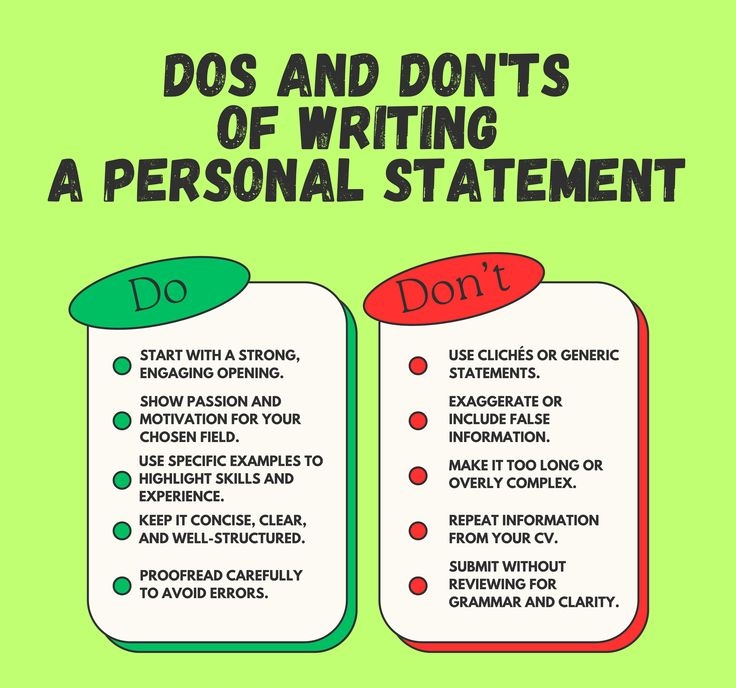
What should you avoid when writing a scholarship personal statement?
Even students with strong experiences can weaken their applications through avoidable writing mistakes. Here are some of the most important ones.
1. Starting with generic quotations.
Opening with a popular quotation about success, education or perseverance rarely helps the reader understand you.Instead of borrowing someone else’s words, introduce an experience, interest or perspective that genuinely belongs to you.
2. Using exaggerated language.
Statements such as “I am the most passionate student in my department” or “I am destined to change the world” are difficult to evaluate without evidence.
Let your experiences demonstrate your qualities.
3. Repeating your CV.
Your personal statement should not become a paragraph-by-paragraph reproduction of your academic and extracurricular history. Select the experiences that best support your message and explain their significance.
4. Writing only about financial difficulties.
Financial need may be central to a need-based scholarship, but your statement should also communicate your academic commitment, ambitions and potential.
5. Applying with the same statement everywhere.
Different scholarship providers have different objectives and requirements.
Tailor your statement to the actual opportunity.
6. Making unsupported claims.
If you claim to have led a project, received an award or produced a measurable result, ensure that the information is accurate and can be supported where necessary.
7. Ignoring the application instructions.
A brilliant statement can still fail to meet the requirements if it exceeds the word limit, answers the wrong question or ignores the requested format.
8. Submitting without proofreading.
Typos, grammatical errors, inconsistent dates and poorly structured paragraphs can make an otherwise good statement difficult to read.
9. Trying too hard to sound sophisticated.
Using complicated vocabulary does not automatically make your statement impressive. Write in clear, natural language. Your goal is to communicate your experiences and ideas, not to demonstrate how many difficult words you know.
The University of Maryland’s National Scholarships Office specifically cautions against clichés, vague descriptions, unnecessary attempts to impress and rewriting a CV in prose.
Then, comes the big question that I would answer before I leave, Can you use AI to write your scholarship personal statement?
Yes, AI tools can help you brainstorm, organise ideas, identify grammatical errors and improve the clarity of a draft.
However, there is an important distinction between using AI as a writing assistant and allowing it to invent your personal story.
You should never submit a statement containing experiences, achievements, responsibilities or ambitions that do not genuinely belong to you.
A sensible approach is:
1. Write down your real experiences and ambitions.
2. Develop your central message.
3. Create your first draft using your own information.
4. Use an AI tool, where permitted, to identify unclear sentences, grammatical mistakes and structural weaknesses.
5. Review every suggested change.
6. Restore your natural voice where editing has made the statement sound artificial.
7. Confirm that the final document complies with the scholarship provider’s rules on AI assistance.
Some scholarship providers may restrict or prohibit AI-generated application materials. Always check their policies.
Most importantly, you should be able to explain every sentence in your personal statement if you are invited for an interview.
Final personal statement checklist before submitting your scholarship application.
Before uploading your document, use this checklist to review your work.
• [ ] I have read the scholarship requirements carefully.
• [ ] My statement answers the exact question asked.
• [ ] My opening introduces a clear personal theme.
• [ ] I have explained relevant aspects of my educational journey.
• [ ] I have used specific examples rather than unsupported claims.
• [ ] I have explained what I learned from important experiences.
• [ ] My achievements and responsibilities are accurately represented.
• [ ] I have discussed financial need where relevant.
• [ ] My academic and future ambitions are clearly explained.
• [ ] I have shown why this particular scholarship matters to me.
• [ ] My statement is personalised rather than copied from a generic template.
• [ ] I have followed the word limit and formatting instructions.
• [ ] I have checked grammar, spelling and punctuation.
• [ ] I have reviewed the final document and can defend every claim.
Frequently asked questions about scholarship personal statements.
How do I start a personal statement for a scholarship?
Start with a meaningful experience, observation, motivation or interest that helps explain who you are. Your opening should introduce the central theme of your statement and give the reader a reason to understand your journey.
Avoid generic quotations and introductions that could belong to almost any applicant.
What should I include in a personal statement for a scholarship?
Depending on the scholarship prompt, you may include your background, educational journey, academic interests, achievements, leadership experiences, personal challenges, financial circumstances, future ambitions and reasons for applying. Only include information that helps answer the question and demonstrate your suitability.
How do I write a personal statement for a scholarship with no experience?
You can draw from academic projects, independent learning, volunteering, peer support, personal responsibilities, community participation and other genuine experiences. You do not need formal employment or a major leadership position to demonstrate initiative, commitment and potential.
Should I talk about my financial situation in my scholarship personal statement?
If the scholarship considers financial need or specifically asks about your circumstances, yes. Explain your situation honestly, describe how it affects your education and clarify how the scholarship would help.
If the scholarship does not request financial information, prioritise the qualities and experiences relevant to its selection criteria.
Can I use the same personal statement for multiple scholarships?
You can maintain a strong master draft containing your background, experiences and ambitions. However, you should tailor each submission to the scholarship’s specific prompt, objectives, eligibility criteria and word limit. Do not submit an unchanged generic statement when the application requires a specific response.
Should I include my achievements in my personal statement?
Yes, where they are relevant. However, do more than list awards and positions. Explain what you accomplished, what your contribution involved and how the experience influenced your development.
Can I write my personal statement in the first person?
Yes. Personal statements are generally written in the first person because you are explaining your own experiences, perspectives and ambitions. Use “I” naturally without beginning every sentence the same way.
Should my personal statement have a title?
Follow the application instructions. If no title is required, a simple heading such as “Personal Statement” is usually sufficient. Do not spend time creating a dramatic title when the scholarship provider has not requested one.
Your story deserves to be understood. Learn how to tell it well.
Your story deserves to be understood. Learn how to tell it well. A scholarship personal statement is more than an application requirement. It is an opportunity to communicate the connection between your background, your education, your experiences and the future you are working towards.
You do not need to pretend that your journey has been perfect. You do not need to invent achievements or fill your statement with complicated vocabulary, and you do not need to have accomplished everything already.
What you need is a clear understanding of your own experiences, the ability to explain what they mean and the discipline to connect them to the opportunity you are pursuing.
Start by understanding the scholarship. Identify the experiences that genuinely define your journey. Build a clear central message, use specific examples, explain your ambitions and revise your work carefully.
Most importantly, remember that personalisation is not simply inserting your name, course and institution into a template. It means making the entire statement reflect your actual experiences, motivations, values and direction.
At Brains Beyond Borders, we believe that discovering opportunities should be accompanied by the knowledge and practical skills required to pursue them.
Keep learning, keep preparing and keep putting your best work forward.
I, Adelanwa A. Emmanuel wishes you all the very best into your academic journey!