CODESRIA RESEARCH GRANTS 2027: APPLY FOR US$5,000–US$15,000 TO RESEARCH AFRICAN UNIVERSITY ECOSYSTEMS.
The council for the Development of Social Science Research in Africa (CODESRIA) has opened applications for its 2027 Research Grants on University Ecosystems, inviting researchers affiliated with African higher education and research institutions to submit proposals examining the challenges and future of universities across the continent.
Supported by the Andrew Carnegie Foundation, the initiative focuses on four interconnected areas: higher education, gender, academic freedom and the quality of associational life in African universities.
Applicants are expected to submit original, interdisciplinary research proposals addressing issues that affect university governance, gender equality, institutional autonomy, academic culture, knowledge production and social transformation.
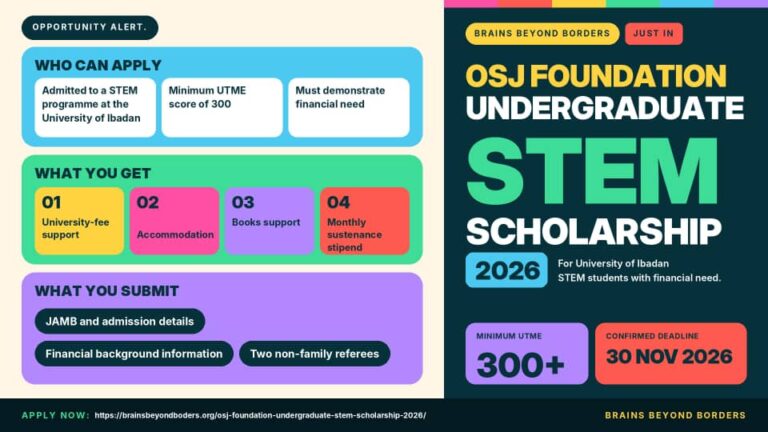 ScholarshipsOsj Foundation Undergraduate STEM Scholarship 2026: Full Scholarship, Accommodation and Monthly Stipend at the University of Ibadan.Nov 24, 2026
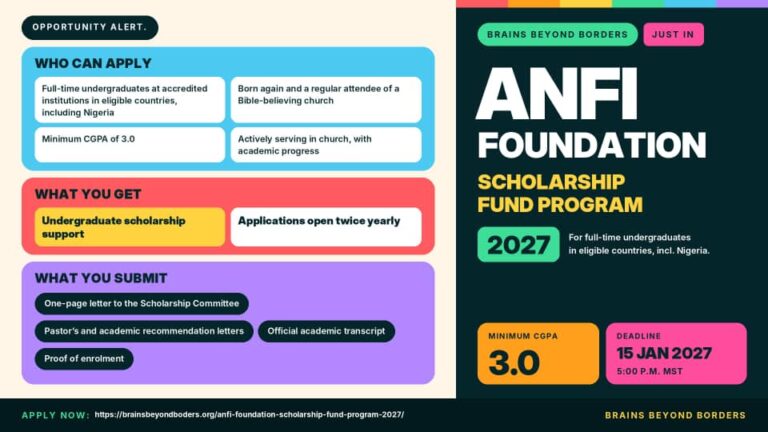 ScholarshipsAnfi Foundation Scholarship Fund Program 2027.Nov 24, 2026
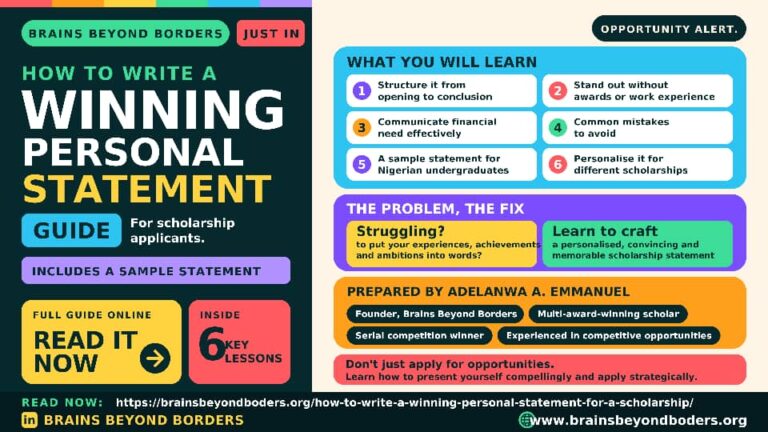 ResourcesHow to Write a Winning Personal Statement for a Scholarship: A Practical Guide with Examples for Students.Nov 23, 2026
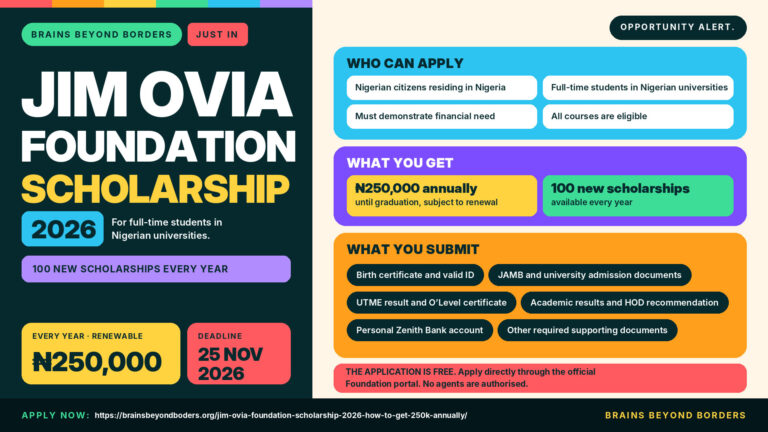 ScholarshipsJim Ovia Foundation Scholarship 2026: How to Get ₦250,000 Annually and Apply Before the Deadline.Nov 23, 2026
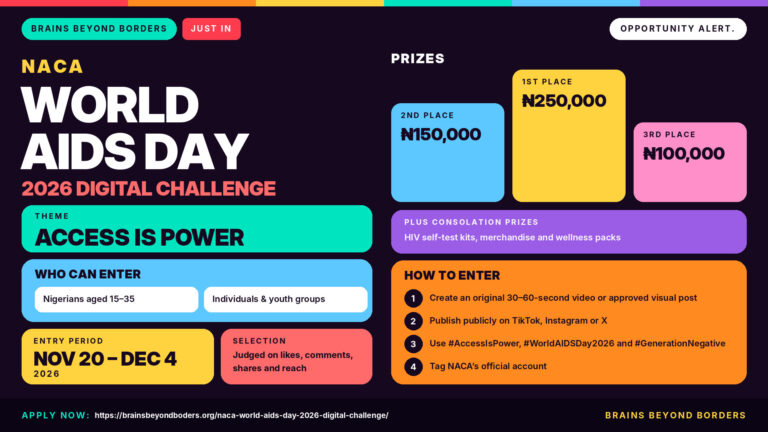 CompetitionsNaca World Aids Day 2026 Digital Challenge: Win ₦250,000 in the Access Is Power Competition.Nov 22, 2026
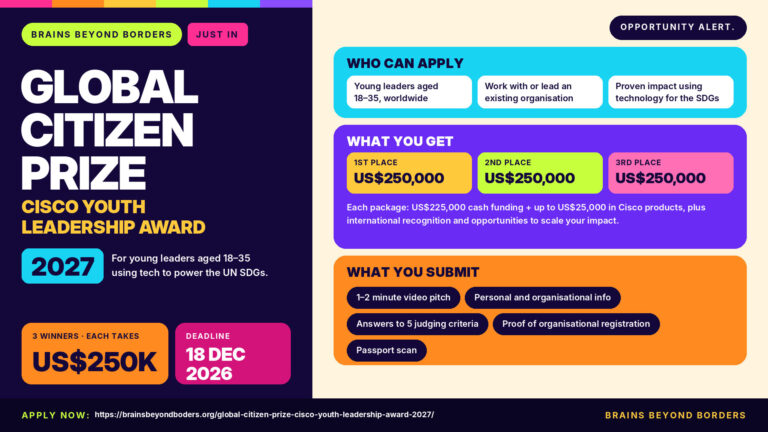 GrantsGlobal Citizen Prize Cisco Youth Leadership Award 2027: Win US$250,000 to Scale Your Impact.Nov 21, 2026
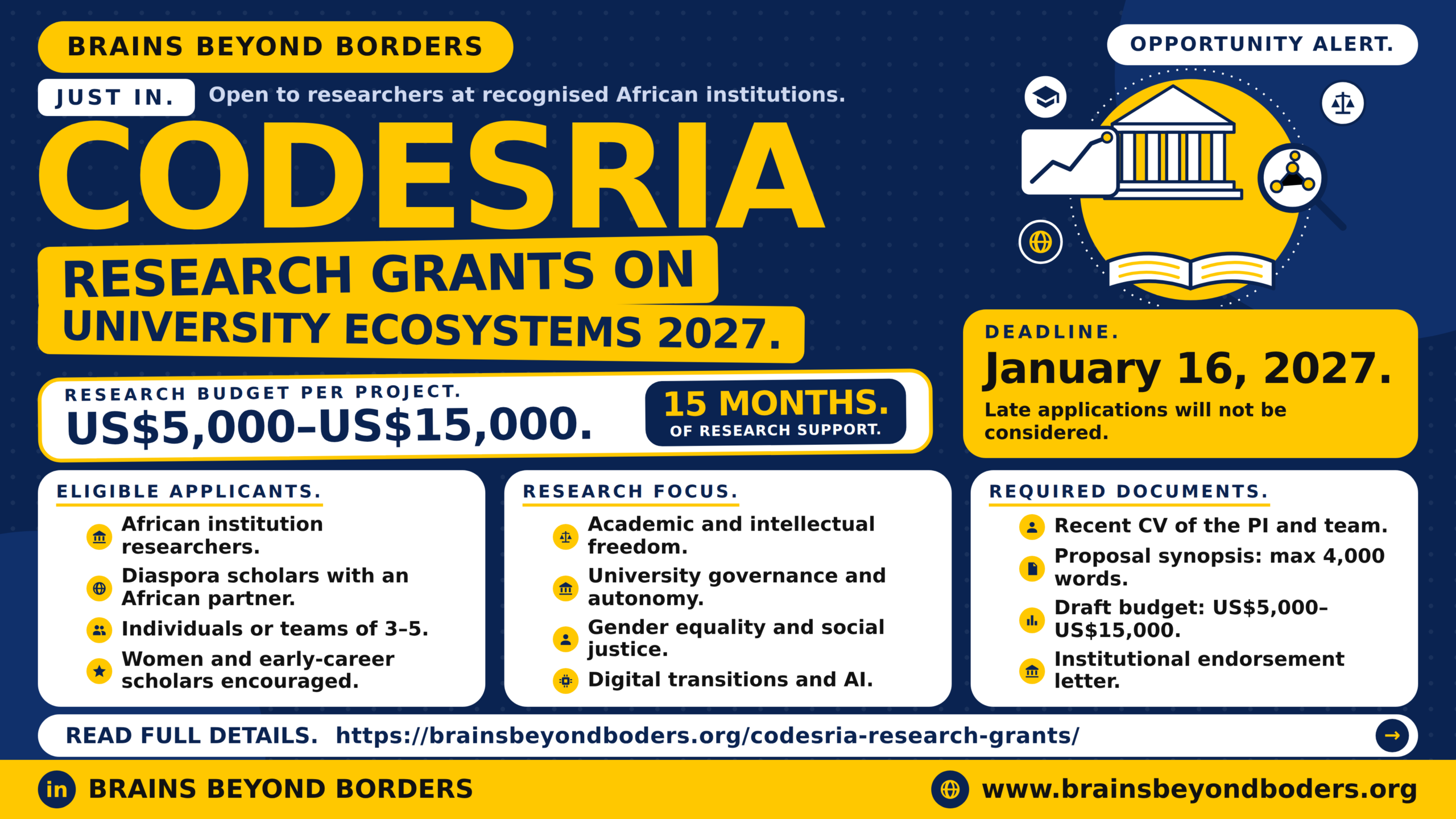
The programme provides a 15-month research support period, and applicants are required to submit proposed budgets ranging from US$5,000 to US$15,000.
The application deadline is 16 January 2027.
Expires Soon

FCMB TECHNOLOGY GRADUATE TRAINEE PROGRAMME 2026: ELIGIBILITY, BENEFITS AND HOW TO APPLY.
Closing Soon
NATIONAL YOUTH PENSION LITERACY ESSAY COMPETITION 2026: ₦2.5 MILLION IN CASH PRIZES.
Closing Soon
SHE CODE AFRICA FUTURHER AI LITERACY PROGRAMME 2026: FREE AI TRAINING FOR WOMEN IN LAGOS.
Closing SoonABOUT THE CODESRIA RESEARCH GRANTS ON UNIVERSITY ECOSYSTEMS 2027
CODESRIA, the Council for the Development of Social Science Research in Africa, is a pan-African organisation headquartered in Dakar, Senegal. Founded in 1973, it works to strengthen social science and humanities research across Africa and support the development of African universities and research communities.
The 2027 Research Grants on University Ecosystems form part of the organisation’s broader efforts to strengthen research capacity, promote gender equality and protect academic freedom in African higher education institutions.
With support from the Andrew Carnegie Foundation, the current call seeks research proposals that examine how African universities are shaped by changing social, political, economic and institutional conditions. The programme recognises that universities are not isolated academic environments.
They are important institutions where questions of equity, governance, intellectual freedom, institutional culture and social transformation intersect. Through this initiative, CODESRIA aims to support high-quality research that can contribute to academic publications, policy development, institutional reforms and public dialogue across Africa.
CODESRIA RESEARCH GRANT 2027 FUNDING AND BENEFITS
Selected researchers will receive research support for a period of 15 months. Applicants are required to prepare a proposed research budget within the range of US$5,000 to US$15,000. The proposed budget should be aligned with the research activities, methodology, work plan and expected outputs.
The programme also provides opportunities for:
– Participation in knowledge-exchange workshops and peer-learning forums.
– Development of high-quality academic research and publishable manuscripts.
– Production of policy briefs or equivalent research outputs.
– Engagement in public dialogue and policy discussions.
– Contribution to research networks and institutional development across Africa.
– Opportunities to generate evidence that can inform policy reforms and academic debates.
Important: The US$5,000–US$15,000 range is the proposed budget range specified in the call.
Applicants should consult the official guidelines for the applicable funding and budget conditions.
RESEARCH THEMES AND PRIORITY AREAS
CODESRIA has identified two broad, interconnected thematic areas for this research initiative:
1. GENDER AND ASSOCIATIONAL LIFE IN AFRICAN UNIVERSITIES
This theme focuses on gender relations, feminist scholarship, institutional civic spaces and the experiences of different groups within African universities.
The call recognises that women and minority groups continue to encounter inequalities and institutional barriers that limit their participation, leadership opportunities and academic progression.
Female academics remain underrepresented in university leadership, while female students may experience difficulties accessing leadership positions in student associations. The programme also highlights concerns relating to campus safety, gender-based violence, social injustice, drug abuse, mental health challenges and the general conditions required to make universities inclusive and safe environments.
Under this theme, CODESRIA welcomes research proposals examining:
– The gendered experiences of students, academic staff and other university personnel.
– Institutional cultures, governance structures and associational life through a gender perspective.
– Barriers to women’s participation, leadership and academic progression.
– Gender-based violence, campus safety and wellbeing.
– Evidence-based recommendations for policy reform, advocacy and institutional transformation.
Researchers investigating the challenges faced by female students, female academics and minority groups within African universities are particularly encouraged to apply.
2. ACADEMIC AND INTELLECTUAL FREEDOM
This theme examines the state of academic and intellectual freedom within African universities and the wider intellectual community.
CODESRIA highlights concerns including political interference, state influence, donor pressure, institutional restrictions and other factors that may undermine the independence of academic institutions and researchers.
The call also emphasises the relationship between academic freedom and associational life. Strong academic freedom requires independent and inclusive student and faculty associations that can organise, discuss ideas, challenge institutional decisions and hold university authorities accountable.
Researchers are therefore encouraged to investigate:
– Threats to academic and intellectual freedom within African universities.
– The relationship between gender, academic freedom and university associational life.
– Political interference and institutional restrictions on academic activities.
– The role of student and faculty associations in protecting academic freedom.
– The relationship between universities, democratic participation and public life.
– How academic freedom can strengthen communities and contribute to socioeconomic transformation.
Proposals examining the intersection of gender, academic freedom and associational life are particularly encouraged.
SPECIFIC RESEARCH SUB-THEMES
In addition to the two broad themes, CODESRIA has identified specific research areas that proposals should address.
These include:
1. Academic and intellectual freedom.
2. University governance, autonomy and accountability.
3. Funding models and their implications for equity and quality.
4. Digital transitions, artificial intelligence and emerging pedagogical innovations.
5. Research ecosystems, knowledge production and epistemic justice.
6. Gender, minority inclusion and social justice in university spaces.
7. Neoliberalism, globalisation and institutional autonomy in university governance across Africa.
8. Gender, minority groups and university life in African universities.
9. The dynamics of private universities and Technical and Vocational Education and Training (TVET) institutions in Africa.
10. University missions, mandates and governance in achieving the Sustainable Development Goals (SDGs) and African Union Agenda 2063.
11. Graduate outcomes in the changing labour and work environment.
12. University-community partnerships involving governments, industries and civil society organisations.
Proposals are expected to engage with theoretical and conceptual debates, evolving research methodologies, empirical case studies, policy analysis and strategies for advocacy and institutional change.
Expires Soon
FCMB TECHNOLOGY GRADUATE TRAINEE PROGRAMME 2026: ELIGIBILITY, BENEFITS AND HOW TO APPLY.
Closing Soon
NATIONAL YOUTH PENSION LITERACY ESSAY COMPETITION 2026: ₦2.5 MILLION IN CASH PRIZES.
Closing Soon
SHE CODE AFRICA FUTURHER AI LITERACY PROGRAMME 2026: FREE AI TRAINING FOR WOMEN IN LAGOS.
Closing SoonWHO CAN APPLY FOR THE CODESRIA RESEARCH GRANTS 2027?
The opportunity is open to researchers affiliated with recognised African higher education institutions or research institutions.
The official eligibility conditions include:
– Applicants must have an institutional affiliation with a recognised African higher education or research institution.
– African scholars living in the diaspora may apply in collaboration with colleagues based at an African institution.
– Both individual researchers and collaborative research teams are eligible.
– Collaborative research teams must comprise three to five members.
– Interdisciplinary, inter-institutional and multi-country research teams are strongly encouraged.
WHO IS PARTICULARLY ENCOURAGED TO APPLY?
CODESRIA specifically encourages applications from:
– Women scholars.
– Early-career academics.
– Researchers affiliated with less well-resourced universities across Africa.
– Researchers working across disciplines and institutions.
– Scholars whose research addresses the relationship between gender, academic freedom and university associational life.
Applicants who have outstanding or pending deliverables from previous or ongoing CODESRIA-funded projects are not encouraged to apply.
PROJECT DURATION AND EXPECTED DELIVERABLES
Successful researchers will receive support over 15 months to undertake original research aligned with the programme’s thematic priorities.
During the programme, selected researchers will be expected to:
1. Conduct original research addressing the priority themes and sub-themes.
2. Participate in knowledge-exchange workshops and peer-learning forums.
3. Produce at least one publishable research manuscript, such as a journal article and policy brief or equivalent.
4. Contribute to public dialogue and policy engagement activities.
5. Submit periodic progress reports.
6. Submit a final consolidated research output.
The programme therefore expects researchers to produce work that contributes not only to academic knowledge but also to policy discussions and institutional development across Africa.
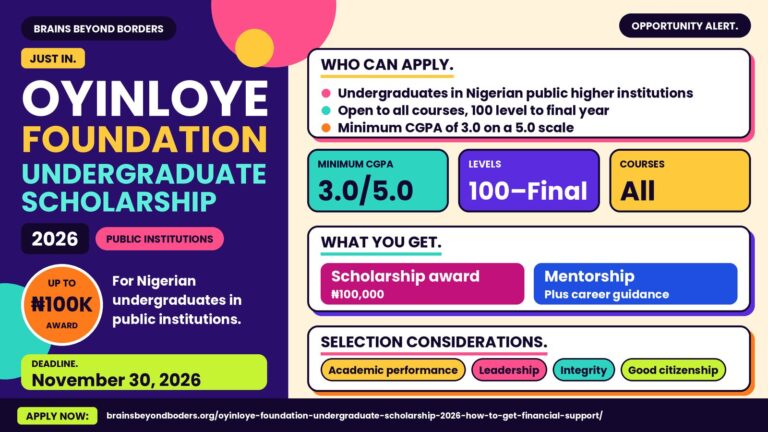 ScholarshipsOyinloye Foundation Undergraduate Scholarship 2026: How to Get ₦100,000 in Financial Support.Nov 21, 2026
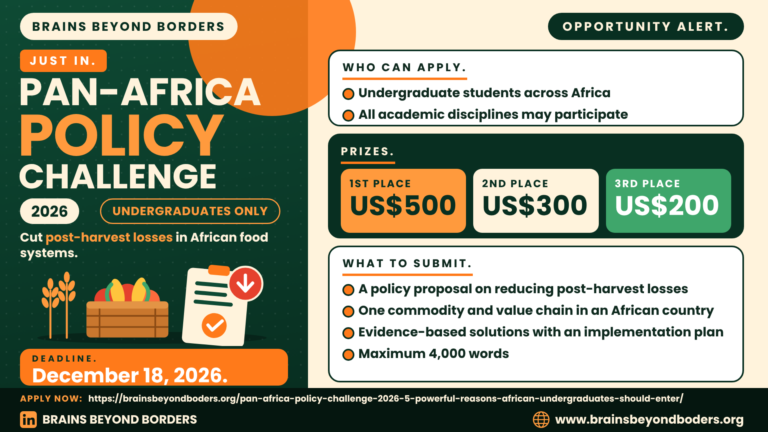 DuelsPan-Africa Policy Challenge 2026: 5 Powerful Reasons African Undergraduates Should Enter.Nov 21, 2026
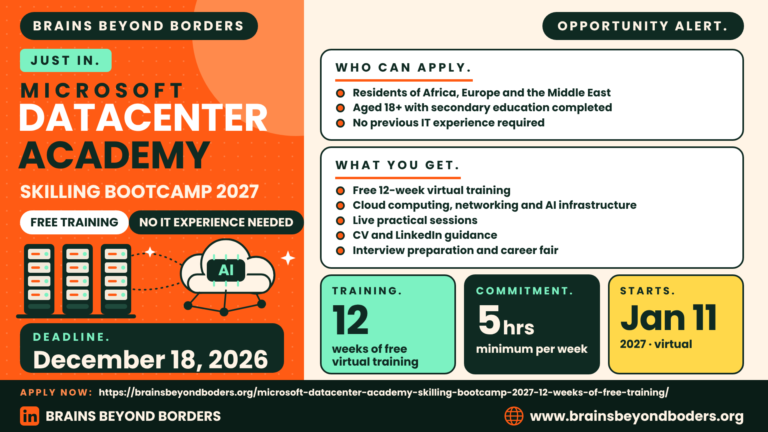 AI ToolsMicrosoft Datacenter Academy Skilling Bootcamp 2027: 12 Weeks of Free Training in Cloud Computing, AI Infrastructure and Networking.Nov 20, 2026
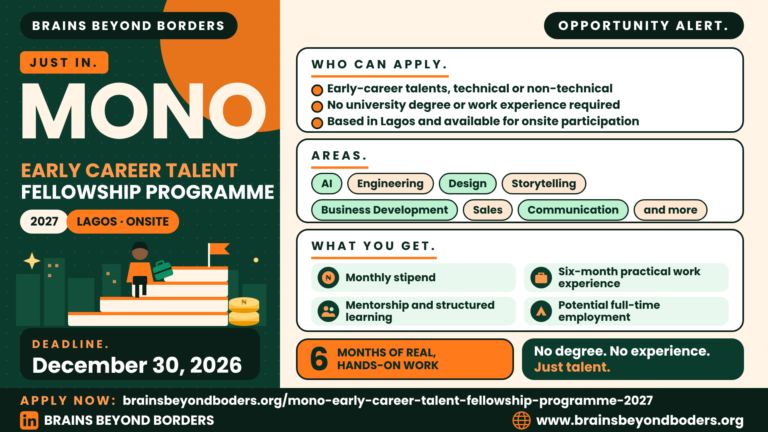 FellowshipsMono Early Career Talent Fellowship Programme 2027: Apply for a 6-Month Fellowship with Monthly Stipend in Lagos.Nov 20, 2026
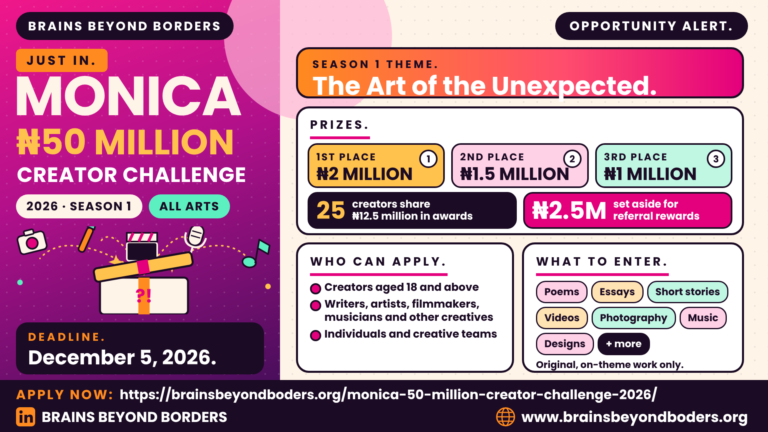 DuelsMonica ₦50 Million Creator Challenge 2026: The Guide for You to Apply and Win .Nov 20, 2026
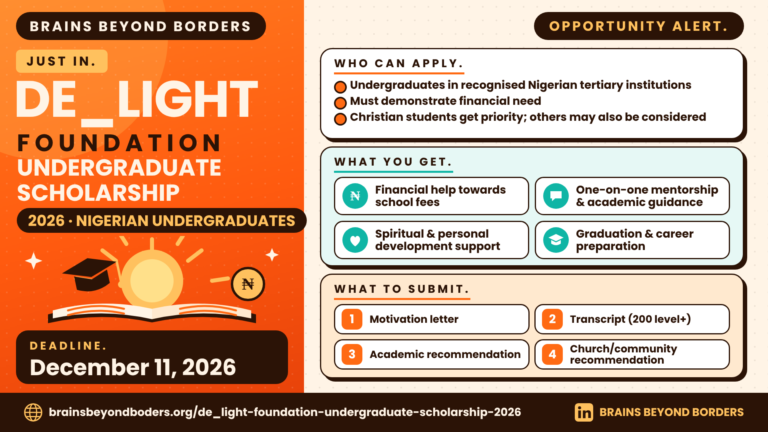 ScholarshipsDe_Light Foundation Undergraduate Scholarship 2026: Financial Support and Mentorship for Nigerian Students.Nov 18, 2026
Expires Soon
FCMB TECHNOLOGY GRADUATE TRAINEE PROGRAMME 2026: ELIGIBILITY, BENEFITS AND HOW TO APPLY.
Closing Soon
NATIONAL YOUTH PENSION LITERACY ESSAY COMPETITION 2026: ₦2.5 MILLION IN CASH PRIZES.
Closing Soon
SHE CODE AFRICA FUTURHER AI LITERACY PROGRAMME 2026: FREE AI TRAINING FOR WOMEN IN LAGOS.
Closing SoonAPPLICATION REQUIREMENTS AND DOCUMENTS
Applicants must prepare and submit the following documents:
1. CURRICULUM VITAE (CV)
Applicants must provide a recent CV highlighting their academic qualifications, research experience and relevant publications.For collaborative applications, CVs of all team members must be attached.
2. RESEARCH PROPOSAL SYNOPSIS
Applicants must submit a proposal synopsis of not more than 4,000 words.
The proposal should clearly present:
– A well-defined research question or problem statement.
– Familiarity with recent literature and relevant academic discussions in the subject area.
– A conceptual or theoretical framework guiding the proposed research.
– A concise research methodology.
– A research work plan, including timelines.
– A draft research budget.
– A list of proposed scholarly and non-scholarly outputs.
The proposal should demonstrate how the research connects with the programme’s thematic priorities and how its findings could contribute to academic knowledge, policy development or institutional transformation.
3. DRAFT RESEARCH BUDGET
Applicants must provide a proposed research budget ranging from US$5,000 to US$15,000.
The budget should correspond with the proposed research activities and work plan.
4. INSTITUTIONAL AFFILIATION LETTER
Applicants must provide a formal letter of affiliation or endorsement from a recognised higher education or research institution.
This document should establish the applicant’s institutional affiliation.
HOW TO APPLY FOR THE CODESRIA RESEARCH GRANTS 2027
All application documents must be submitted electronically through the official CODESRIA application platform.
Interested applicants should follow these steps:
1. Visit the official CODESRIA research grant announcement and carefully review the call.
2. Access the CODESRIA application portal.
3. Sign in or create an account on the application platform, as applicable.
4. Locate the relevant grants and subventions application opportunity.
5. Prepare the required CV, research proposal synopsis, draft budget and institutional affiliation letter.
6. Ensure that the proposal addresses the programme’s research themes and includes the required research question, theoretical framework, methodology, work plan and expected outputs.
7. Submit all required documents electronically through the CODESRIA application platform before the deadline.
Applicants should ensure that their submissions are complete and comply with the official call requirements. Late applications will not be considered.
APPLICATION DEADLINE
The deadline for the CODESRIA Research Grants on University Ecosystems 2027 is 16 JANUARY, 2027.
All applications must be submitted electronically through the official CODESRIA application platform before the deadline.
Expires Soon
FCMB TECHNOLOGY GRADUATE TRAINEE PROGRAMME 2026: ELIGIBILITY, BENEFITS AND HOW TO APPLY.
Closing Soon
NATIONAL YOUTH PENSION LITERACY ESSAY COMPETITION 2026: ₦2.5 MILLION IN CASH PRIZES.
Closing Soon
SHE CODE AFRICA FUTURHER AI LITERACY PROGRAMME 2026: FREE AI TRAINING FOR WOMEN IN LAGOS.
Closing SoonOFFICIAL APPLICATION LINKS AND ENQUIRIES
• Official CODESRIA call for proposals.
• Official application portal.
• Enquiries: [email protected]
• CODESRIA telephone: +221 76 609 13 05.
• Organisation: Council for the Development of Social Science Research in Africa (CODESRIA).
Researchers working on African higher education, gender equality, academic freedom, university governance and institutional transformation are encouraged to review the official call and submit proposals that align with the programme’s objectives before the deadline.
[bbp_banner]