MSF WITHOUT BORDERS MEDIA FELLOWSHIP 2026: REPORTING GRANTS, MENTORSHIP AND TRAINING FOR JOURNALISTS.
Médecins Sans Frontières (MSF), also known as Doctors Without Borders, is inviting applications for the 2026 cohort of its Without Borders Media Fellowship, a programme supporting journalists and other media professionals who want to investigate underreported humanitarian and public-health issues across South Asia.
The fellowship is designed to strengthen evidence-based reporting on health inequalities, humanitarian emergencies, barriers to medical care and the circumstances of communities affected by crises. Selected fellows develop substantial reporting projects with support from experienced journalists, public-health specialists and MSF medical and operational experts.
The programme is intended for working media professionals with a clear reporting proposal and a realistic plan for producing and publishing their work. It is not a university scholarship or a general-purpose personal grant.
• Programme: Without Borders Media Fellowship.
• Organiser: Médecins Sans Frontières (MSF) South Asia.
• Cohort: 2026.
• Programme duration: Approximately four months.
• Geographical focus: South Asia.
• Application language: English.
• Application deadline: 15 November 2026, according to a recent third-party listing. Confirm this date on the official programme page before submitting.
Expires Soon

FCMB TECHNOLOGY GRADUATE TRAINEE PROGRAMME 2026: ELIGIBILITY, BENEFITS AND HOW TO APPLY.
Closing Soon
NATIONAL YOUTH PENSION LITERACY ESSAY COMPETITION 2026: ₦2.5 MILLION IN CASH PRIZES.
Closing Soon
SHE CODE AFRICA FUTURHER AI LITERACY PROGRAMME 2026: FREE AI TRAINING FOR WOMEN IN LAGOS.
Closing Soon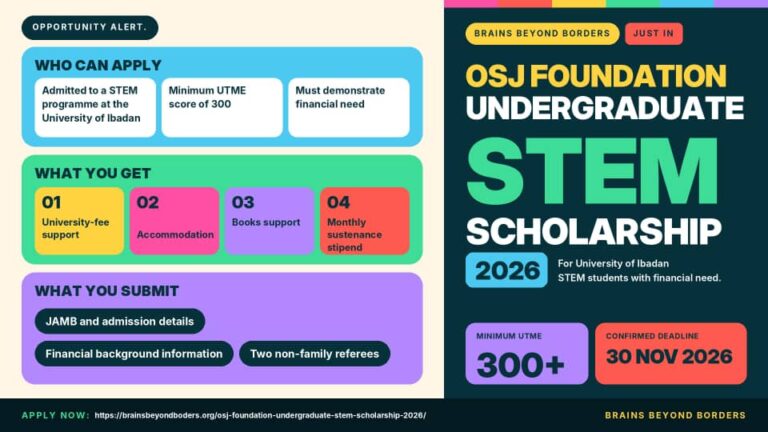 ScholarshipsOsj Foundation Undergraduate STEM Scholarship 2026: Full Scholarship, Accommodation and Monthly Stipend at the University of Ibadan.Nov 24, 2026
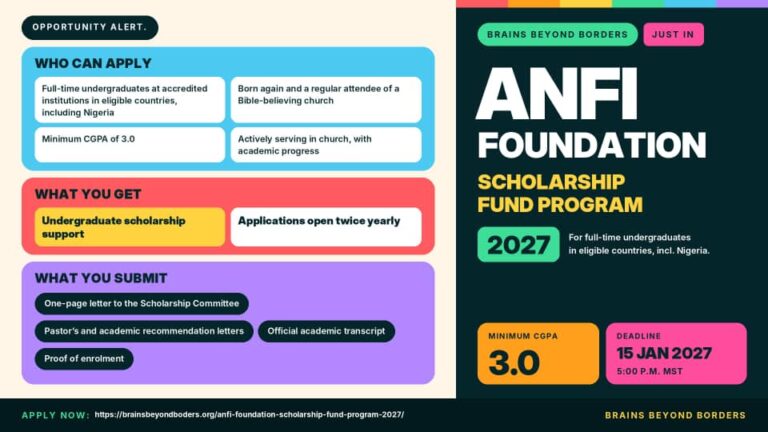 ScholarshipsAnfi Foundation Scholarship Fund Program 2027.Nov 24, 2026
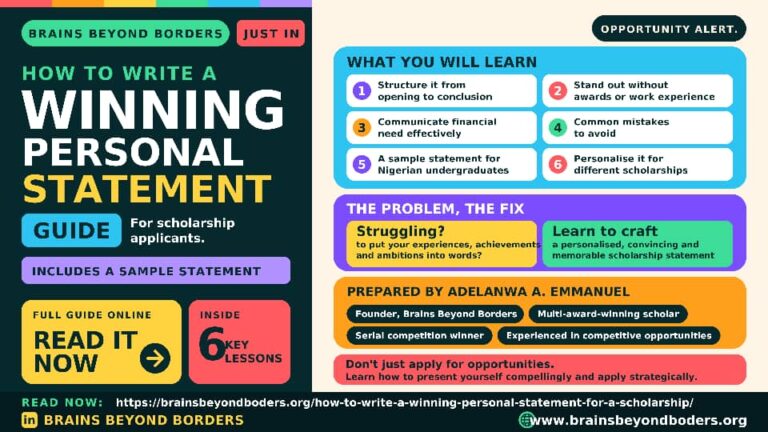 ResourcesHow to Write a Winning Personal Statement for a Scholarship: A Practical Guide with Examples for Students.Nov 23, 2026
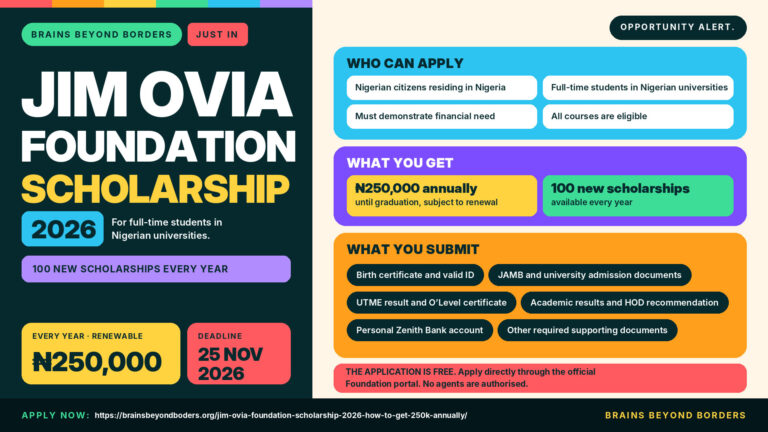 ScholarshipsJim Ovia Foundation Scholarship 2026: How to Get ₦250,000 Annually and Apply Before the Deadline.Nov 23, 2026
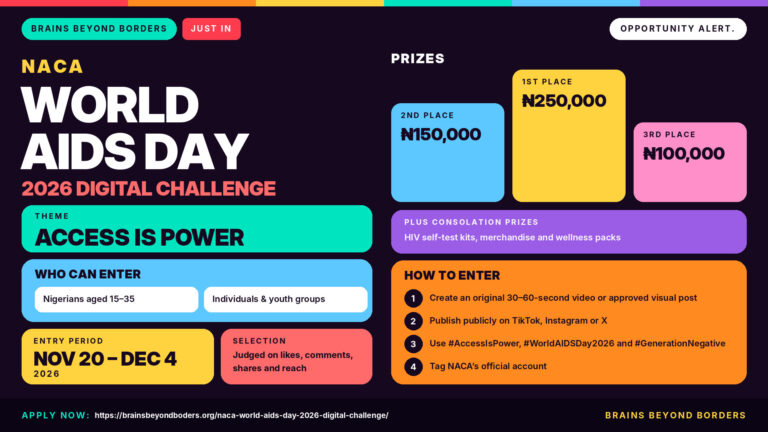 CompetitionsNaca World Aids Day 2026 Digital Challenge: Win ₦250,000 in the Access Is Power Competition.Nov 22, 2026
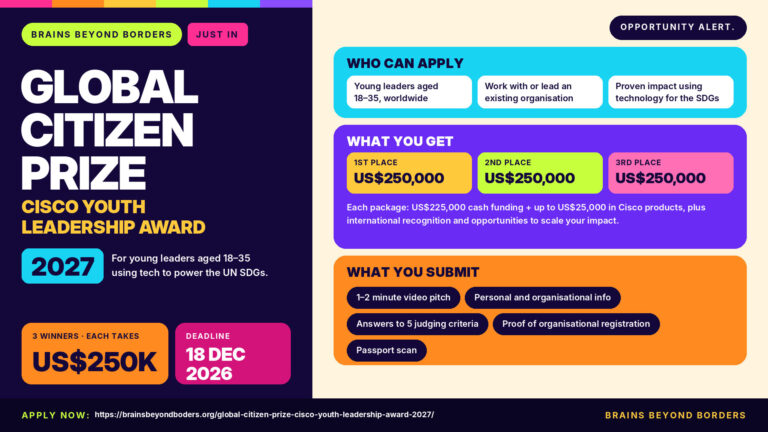 GrantsGlobal Citizen Prize Cisco Youth Leadership Award 2027: Win US$250,000 to Scale Your Impact.Nov 21, 2026
FELLOWSHIP BENEFITS
Selected fellows receive professional and project-related support to develop their proposed reporting work.
1. REPORTING AND TRAVEL GRANTS
MSF provides financial support for approved reporting expenses and field visits, based on a reasonable, detailed budget. Applicants should explain the costs required to investigate their proposed story.
The grant is not automatically a salary or unrestricted cash award. MSF encourages news organisations to pay journalists for their work. A stipend to cover a reporter’s time may be considered in exceptional circumstances. Newsroom applicants cannot include general overhead or indirect expenses in their budgets.
2. PROFESSIONAL MENTORSHIP
Fellows work with mentors who have experience in journalism, public health and related fields. Mentorship supports the development and execution of the reporting project.
3. TRAINING AND SUBJECT-MATTER GUIDANCE
Participants receive training and sensitisation to help them understand the medical, public-health and humanitarian dimensions of their chosen topic.
4. ACCESS TO EXPERTS
Fellows can draw on relevant MSF medical and operational specialists and, where applicable, experts from partner organisations to deepen their reporting.
5. PUBLICATION OPPORTUNITIES
Multimedia journalists producing news feature stories may have their work featured on the MSF South Asia website. Publication is not guaranteed for every project.
AVAILABLE GRANT CATEGORIES
Applicants should select the grant category that best fits their proposed story and check the current official guidelines for the applicable geographical and thematic restrictions.
1. MSF GENERAL GRANT
The General Grant supports reporting on public-health and humanitarian issues across the programme’s designated South Asian countries.
Eligible themes include:
– Tuberculosis: Barriers to diagnosis and treatment, drug-resistant tuberculosis, and the impact of the disease on affected communities.
– HIV: Access to testing, treatment and continuing care, especially in underserved or crisis-affected settings.
– Health impacts of climate change: How extreme weather, environmental changes, displacement and climate-related pressures affect health.
– Women’s health: Gaps in reproductive healthcare, maternal services and other essential health services.
– Impact of caste on health: How caste-based discrimination and social exclusion affect access to dignified healthcare.
– Health misinformation: The effects of misleading health information and the challenges of communicating reliable evidence.
– Antimicrobial resistance: Challenges involving effective antibiotics, diagnosis and access to appropriate treatment.
– Digital and mobile health: The role and limitations of digital technologies in delivering healthcare.
– Access to healthcare in conflict settings: The challenges facing people seeking medical care during conflict and insecurity.
– Migration, displacement and refugees: Healthcare barriers affecting displaced populations and people on the move.
– Mental health: The public-health and humanitarian dimensions of mental-health needs and access to care.
The official programme page identifies different geographical priorities for individual themes. Applicants must therefore ensure that their proposed reporting location fits the relevant theme rather than assuming that every topic is open in every country.
2. MSF–DNDi GRANT FOR NEGLECTED TROPICAL DISEASES
The second category is offered in partnership with the Drugs for Neglected Diseases initiative (DNDi).It supports reporting on neglected tropical diseases and the conditions that make diagnosis, prevention and treatment difficult for affected communities.
Topics may include:
– Lymphatic filariasis, also known as elephantiasis.
– Visceral leishmaniasis, commonly called kala-azar.
– Mycetoma.
– Dengue.
– Snakebite.
Proposals may examine the relationship between neglected diseases, poverty, inadequate sanitation, limited healthcare access, gender, paediatric health and climate change. Selected recipients receive financial support for reporting expenses and access to relevant DNDi experts.
Important eligibility restriction: The official MSF page states that this grant is open only to applicants from India, Nepal, Bangladesh and Sri Lanka. Applicants from outside these countries should not assume that they qualify for this category.
3. SPECIALIST REPORTING THEMES
The official programme materials also discuss specialist reporting areas, including gender-responsive research and development and antimicrobial resistance. Some themes involve partner organisations and specific geographical priorities. Because these arrangements may have distinct conditions, applicants should confirm the applicable grant category, theme and location requirements in the current official call before preparing a proposal.
Expires Soon
FCMB TECHNOLOGY GRADUATE TRAINEE PROGRAMME 2026: ELIGIBILITY, BENEFITS AND HOW TO APPLY.
Closing Soon
NATIONAL YOUTH PENSION LITERACY ESSAY COMPETITION 2026: ₦2.5 MILLION IN CASH PRIZES.
Closing Soon
SHE CODE AFRICA FUTURHER AI LITERACY PROGRAMME 2026: FREE AI TRAINING FOR WOMEN IN LAGOS.
Closing SoonWHO CAN APPLY?
The fellowship welcomes media professionals of different nationalities and backgrounds who work across South Asia and meet the programme requirements.
Eligible professional backgrounds include:
– Staff journalists and freelance reporters.
– Print and online journalists.
– Photographers and photojournalists.
– Radio and audio journalists.
– Television and video journalists.
– Filmmakers and multimedia storytellers.
– Digital media influencers, including creators working on YouTube.
– Newsroom editors and other relevant media professionals.
Applicants must have at least three years of professional experience. Former fellows are also eligible to apply. Applications must be submitted in English. Fellows may additionally publish their completed stories in relevant local languages. A qualifying proposal must address a significant public-health or humanitarian issue in a country covered by the programme and align with MSF’s humanitarian mission, social mission and values. Selection also considers the timeliness of the proposed story and whether the reporting approach offers meaningful new insight.
Being a content creator alone does not establish eligibility. Applicants should demonstrate relevant professional experience, a credible reporting plan and the ability to deliver the proposed work.
EXPECTED REPORTING DELIVERABLES
Applicants must select one reporting format for their proposed project.
PRINT OR DIGITAL REPORTING
The project must result in either:
– At least two feature or analysis articles of approximately 800 words each; or- One long-form story of at least 1,500 words. The work must be published on a recognised news platform. Applicants who already work for a newsroom should establish that their organisation is willing to publish the proposed story.
VIDEO OR MULTIMEDIA REPORTING
Applicants may propose one of the following formats:
– One video story or short film of at least eight minutes.
– One photo essay containing 15–20 photographs or illustrations, supported by approximately 600 words of text.
– A series of two videos, each at least four minutes long.Applicants must include a letter of commitment from a national or international media organisation willing to publish or broadcast the proposed work.
The fellowship is therefore best suited to applicants who already have a clear story idea, access to relevant sources, and a realistic route to publication.
Expires Soon
FCMB TECHNOLOGY GRADUATE TRAINEE PROGRAMME 2026: ELIGIBILITY, BENEFITS AND HOW TO APPLY.
Closing Soon
NATIONAL YOUTH PENSION LITERACY ESSAY COMPETITION 2026: ₦2.5 MILLION IN CASH PRIZES.
Closing Soon
SHE CODE AFRICA FUTURHER AI LITERACY PROGRAMME 2026: FREE AI TRAINING FOR WOMEN IN LAGOS.
Closing SoonREQUIRED APPLICATION MATERIALS
Applicants should prepare the following information and documents before starting the application.
1. STORY PROPOSAL: 500–750 WORDS
Prepare a well-researched pitch that includes:
– The proposed story title.
– The location or locations where reporting will take place.
– The central reporting question and why it matters.
– Relevant research, data, references and examples from existing reporting.
– The humanitarian or public-health significance of the proposed investigation.
The pitch should show that the applicant understands the issue and has identified a worthwhile reporting angle.
2. PUBLICATION MEDIUM
Specify the intended medium, such as print, digital, television or another applicable format.
3. LETTER OF COMMITMENT OR INTEREST
Provide evidence that a media organisation is willing to publish or broadcast the proposed story. This is particularly important for applicants whose projects depend on a newsroom or media platform.
4. DETAILED REPORTING PLAN
Include the proposed start and end dates, field-visit dates, reporting locations and potential legal or physical risks. Preliminary research on the proposed subject may strengthen the application.
5. LIST OF STAKEHOLDERS
Identify the institutions, organisations, collectives and individuals you intend to approach for information or insight during the reporting process.
6. THREE RECENT, RELEVANT WORK SAMPLES
Provide links to three recently published stories relevant to the proposed subject.
7. STATEMENT OF MOTIVATION
Prepare a statement of approximately 300 words explaining your interest in the fellowship and the significance of the reporting project.
8. CV OR RÉSUMÉ
Include an up-to-date professional CV or résumé demonstrating your relevant experience.
9. TWO PROFESSIONAL REFERENCES
Provide the names and contact details of two professional referees.
10. COLLABORATORS AND PUBLICATION TIMELINE
Identify any proposed collaborators, such as local reporters, photographers, illustrators or data specialists, and provide a tentative publication date. Applicants should prepare these materials carefully and check the live application form for any additional questions or specific upload requirements.
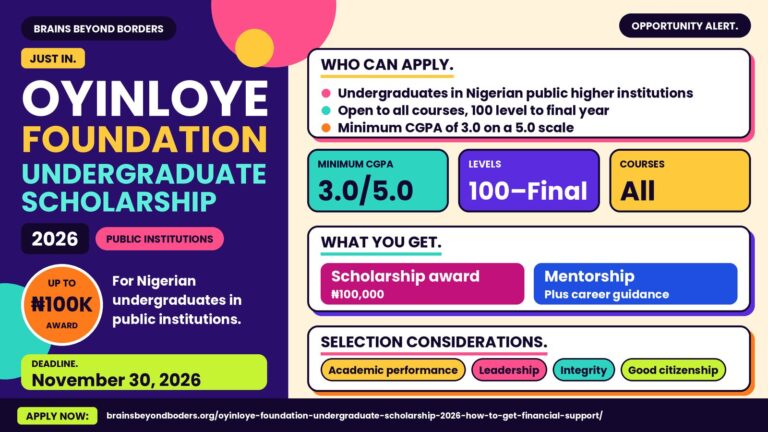 ScholarshipsOyinloye Foundation Undergraduate Scholarship 2026: How to Get ₦100,000 in Financial Support.Nov 21, 2026
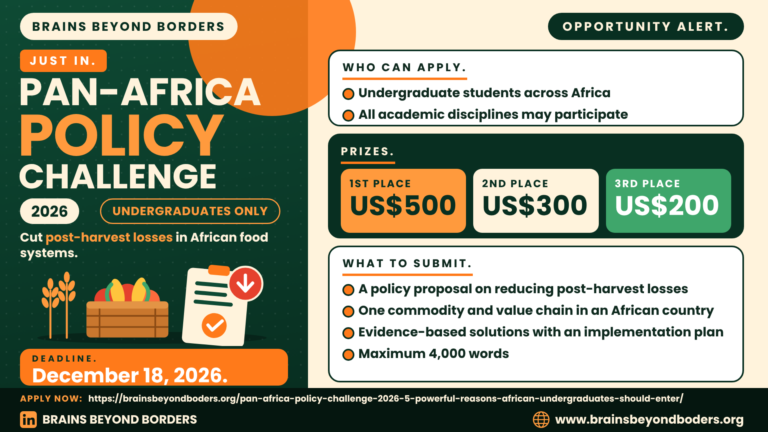 DuelsPan-Africa Policy Challenge 2026: 5 Powerful Reasons African Undergraduates Should Enter.Nov 21, 2026
 AI ToolsMicrosoft Datacenter Academy Skilling Bootcamp 2027: 12 Weeks of Free Training in Cloud Computing, AI Infrastructure and Networking.Nov 20, 2026
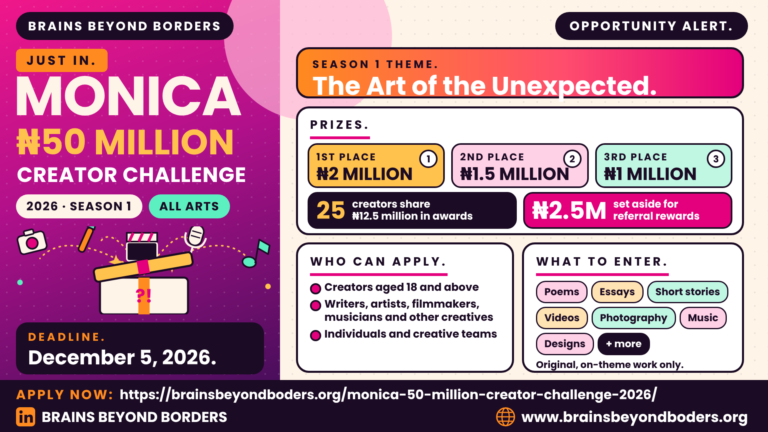 DuelsMonica ₦50 Million Creator Challenge 2026: The Guide for You to Apply and Win .Nov 20, 2026
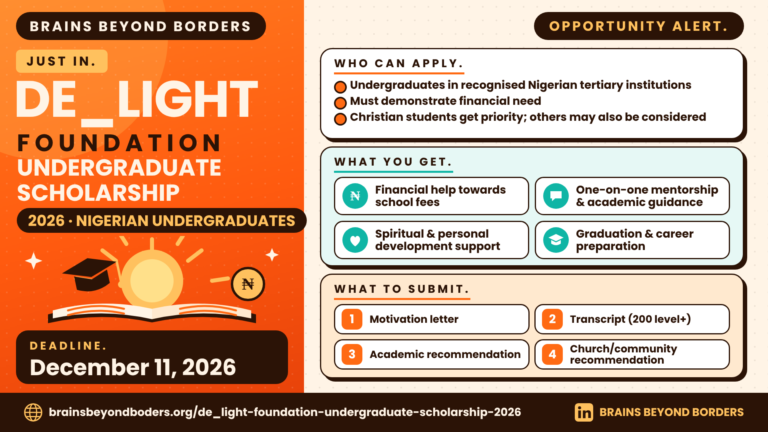 ScholarshipsDe_Light Foundation Undergraduate Scholarship 2026: Financial Support and Mentorship for Nigerian Students.Nov 18, 2026
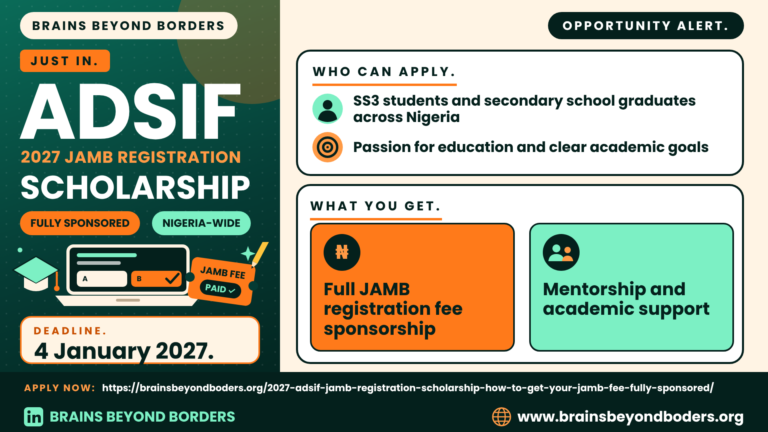 Scholarships2027 ADSIF JAMB Registration Scholarship: How to Get Your JAMB Fee Fully Sponsored.Nov 18, 2026
HOW TO APPLY
Applications are directed through the official MSF South Asia fellowship page.
STEP 1: READ THE OFFICIAL CALL
Visit the official programme page.
Review the grant categories, thematic priorities, eligible reporting locations and required deliverables before deciding which category fits your proposal.
STEP 2: DEVELOP YOUR STORY PITCH
Prepare the 500–750-word proposal, supported by credible research and references. Clearly identify the reporting question, the people or communities affected, the locations involved and the wider public-health or humanitarian significance.
STEP 3: SECURE A MEDIA COMMITMENT
Contact an appropriate news organisation and obtain a letter confirming its interest or commitment to publish or broadcast your proposed work.
STEP 4: ASSEMBLE THE SUPPORTING MATERIALS
Prepare your reporting plan, three relevant published work samples, motivation statement, CV, two professional references, stakeholder list, collaborator information and tentative publication date.
STEP 5: ACCESS THE OFFICIAL APPLICATION FORM
Use the Apply Now link on the official MSF South Asia fellowship page.
At the time this information was checked, the linked application form displayed a message that its submission quota had been exceeded. Applicants should therefore confirm that the form is accepting submissions before relying on it as a functioning application route.
If the form remains unavailable, contact the MSF South Asia media team to ask for the correct submission procedure and confirm whether the application deadline has changed.
Official media contact:
– Email: [email protected].
– Telephone: +94-773364886.
These are published MSF South Asia media-contact details, not a separately confirmed fellowship application email. Applicants should ask for the appropriate fellowship submission route rather than sending sensitive documents to an unverified address.
APPLICATION DEADLINE
A third-party opportunity listing gives 15 November 2026 as the closing date. However, the deadline was not visible in the official page content reviewed for this guide.Applicants should confirm the closing date directly with MSF South Asia and check that the application form is accepting submissions before making final preparations. Do not rely solely on a third-party listing when the official submission form is currently displaying an error.
Expires Soon
FCMB TECHNOLOGY GRADUATE TRAINEE PROGRAMME 2026: ELIGIBILITY, BENEFITS AND HOW TO APPLY.
Closing Soon
NATIONAL YOUTH PENSION LITERACY ESSAY COMPETITION 2026: ₦2.5 MILLION IN CASH PRIZES.
Closing Soon
SHE CODE AFRICA FUTURHER AI LITERACY PROGRAMME 2026: FREE AI TRAINING FOR WOMEN IN LAGOS.
Closing SoonIMPORTANT NOTES FOR APPLICANTS
– This is a professional media fellowship, not a general scholarship for students.
– Applicants need at least three years of professional experience.
– The grant primarily supports approved reporting and travel expenses; it is not an unrestricted living-cost award.
– A letter of commitment or interest from a media organisation is an important application requirement.
– The proposed project must fit the programme’s eligible themes and geographical scope.
– The MSF–DNDi neglected tropical disease grant is restricted to applicants from India, Nepal, Bangladesh and Sri Lanka.
– Selected fellows must deliver publishable work in one of the specified reporting formats.
– Fellows must work responsibly with affected communities and coordinate appropriately with MSF and their mentors on the presentation of sensitive medical information and lived experiences. Patient privacy, rights and access to healthcare must be protected.
– Confirm the current deadline and submission procedure with MSF before applying, because the application form linked from the official page was displaying a quota error when checked.
OFFICIAL LINKS
• Official fellowship information and application page.
• MSF South Asia media contact.
• Media-team email: [email protected].
Reported deadline: 15 November 2026, subject to confirmation by MSF South Asia.
Join the Brains Beyond Borders Community
Get scholarships, tips and updates wherever you are.