
GROOMING CENTRE UNIVERSITY RESEARCH GRANT 2026.
APPLICATION DEADLINE: OCTOBER 23, 2026.
The Grooming Centre University Research Grant 2026 is inviting applications from eligible Nigerian tertiary-institution students undertaking research that contributes to financial inclusion, enterprise development, innovation, poverty reduction and related areas.
The programme is organised by Grooming People for Better Livelihood Centre (Grooming Centre) and managed through the Centre for Research in Enterprise and Action in Management (CREM). Its objective is to encourage research and knowledge development capable of producing practical solutions within the Nigerian context.
 ScholarshipsOsj Foundation Undergraduate STEM Scholarship 2026: Full Scholarship, Accommodation and Monthly Stipend at the University of Ibadan.Nov 24, 2026
 ScholarshipsAnfi Foundation Scholarship Fund Program 2027.Nov 24, 2026
 ResourcesHow to Write a Winning Personal Statement for a Scholarship: A Practical Guide with Examples for Students.Nov 23, 2026
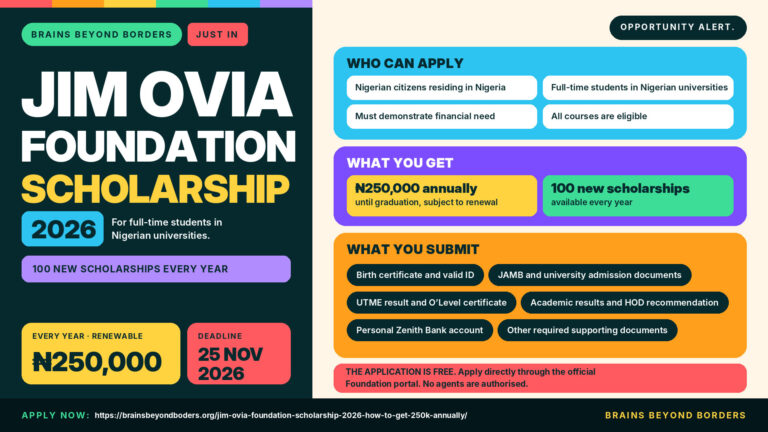 ScholarshipsJim Ovia Foundation Scholarship 2026: How to Get ₦250,000 Annually and Apply Before the Deadline.Nov 23, 2026
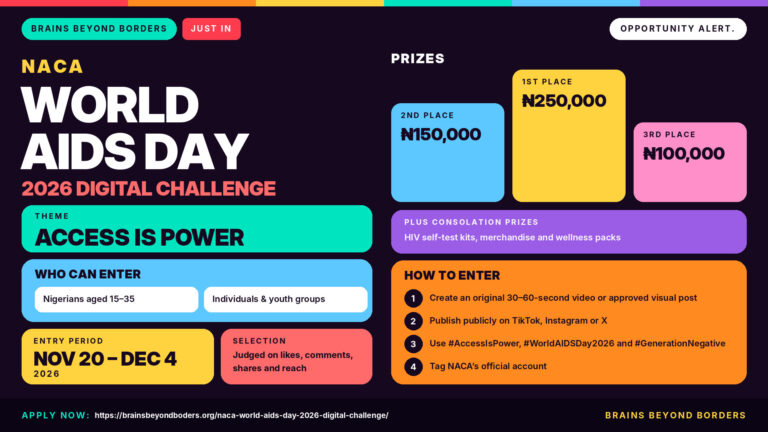 CompetitionsNaca World Aids Day 2026 Digital Challenge: Win ₦250,000 in the Access Is Power Competition.Nov 22, 2026
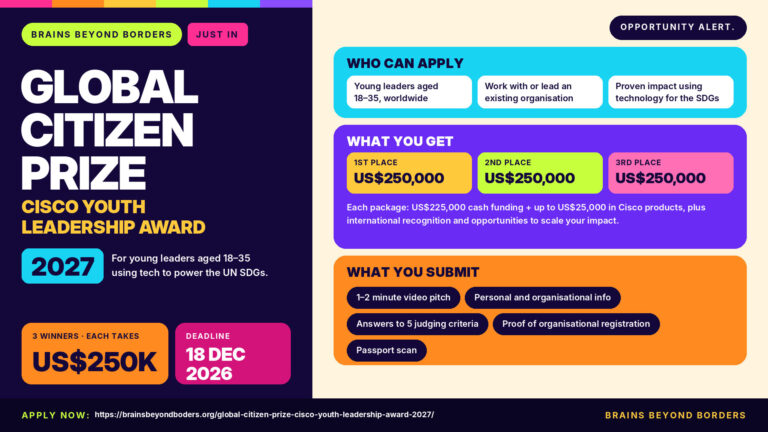 GrantsGlobal Citizen Prize Cisco Youth Leadership Award 2027: Win US$250,000 to Scale Your Impact.Nov 21, 2026
For the 2026 cycle, 150 students are expected to receive grants from a total funding pool of ₦20 million: 100 undergraduate beneficiaries and 50 postgraduate beneficiaries. Current 2026 reporting indicates that successful undergraduates will receive ₦100,000 each, while postgraduate beneficiaries will receive ₦200,000 each.
ABOUT THE GRANT
The Grooming Centre University Grant is a research-focused funding opportunity rather than a general tuition scholarship.It is designed for students whose research addresses issues connected to economic development, financial inclusion, enterprise development and poverty alleviation.
The official programme identifies the following broad research areas including Financial inclusion, microfinance, Rural development, Social enterprise, Micro, small and medium-sized enterprises (MSMEs), Technological development, Digital finance, Youth in development, Women in development, Other research aimed at lifting people out of poverty.
The research should be relevant to Nigeria, practical and innovative, and capable of contributing meaningfully to one or more of these areas.
WHO CAN APPLY?
The current official grant portal states that applicants may be undergraduate or postgraduate students in Nigerian tertiary institutions whose research falls within the programme’s areas of interest.
However, the 2026 programme announcement specifically describes the undergraduate category as final-year students, alongside postgraduate students. Therefore, for the current 2026 cycle, the practical applicant group is:
– Final-year undergraduate students in eligible Nigerian tertiary institutions.
– Postgraduate students conducting qualifying research.
– Students whose research is connected to the programme’s stated areas.
The official portal states that the institution must be an NUC- or NBTE-approved Nigerian university or polytechnic.
WHAT IS THE VALUE OF THE GRANT?
The 2026 programme has a total funding pool of ₦20 million.It is expected to be distributed as follows:
– 100 undergraduate students × ₦100,000 = ₦10 million.
– 50 postgraduate students × ₦200,000 = ₦10 million.
TOTAL: ₦20 MILLION.
The funding therefore supports 150 student researchers in total. This distinction is important: the advertised ₦20 million is the total programme pool, not an individual ₦20 million award.
WHAT KIND OF RESEARCH IS ELIGIBLE?
Your research does not necessarily have to be titled ‘financial inclusion’ or ‘microfinance.’
What matters is whether the research has a meaningful connection to the programme’s development objectives.
• FINANCIAL INCLUSION
Research examining access to financial services, barriers to financial participation, underserved populations, digital financial access and related issues.
• MICROFINANCE
Studies examining microfinance institutions, lending models, financial sustainability, borrowers, microcredit or related systems.
• RURAL DEVELOPMENT
Research addressing economic opportunities, livelihoods, services, infrastructure or development challenges affecting rural communities.
• SOCIAL ENTERPRISE
Studies involving businesses or organisations designed to address social problems while maintaining sustainable operations.
• MSMES
Research addressing the challenges, financing, technology, growth, productivity or development of micro, small and medium-sized enterprises.
• TECHNOLOGICAL DEVELOPMENT
Technology-focused research can qualify where it contributes to enterprise development, inclusion, innovation or poverty reduction.
• DIGITAL FINANCE
Research into digital payments, financial technology, digital banking, financial access and related innovations.
• YOUTH AND WOMEN IN DEVELOPMENT
Research examining how young people or women can participate more effectively in economic development, entrepreneurship, financial systems and related areas.
• POVERTY REDUCTION
Other research may also qualify where it is genuinely aimed at developing practical solutions that can help lift people out of poverty.
WHAT DOES THE PROGRAMME LOOK FOR?
The official requirements go beyond simply having a research topic in one of the listed fields.Your research should demonstrate:
• RELEVANCE TO NIGERIA
The study should address a problem or opportunity that is relevant to the Nigerian context.
• PRACTICAL VALUE
The research should have potential application beyond purely theoretical discussion.
• INNOVATION
The programme expects applicants to demonstrate original or imaginative thinking.
• DATA
The official requirements state that the research should be data-inclusive.
• ORIGINALITY
The research should demonstrate a high level of originality and imaginative thought.
• SUPERVISOR RECOMMENDATION
Applicants must submit a written and signed recommendation from their project supervisor. This is not an optional supporting document. It is specifically listed as part of the academic requirements. Applicants should therefore contact their supervisor early enough to obtain the signed recommendation before beginning the final submission.
RESEARCH PROPOSAL REQUIREMENTS
One of the most substantial parts of the application is the research proposal/concept.The current official application page requires the research proposal to be between 10 and 15 pages.
The official requirements page provides a more extensive structure and mentions components including Introduction, Statement of the problem, Research questions, Research objectives, Significance of the study, Operationalisation of terms, Scope of the study, Literature review, Theoretical review, Conceptual literature, Empirical literature, Theoretical orientation, Conceptual framework, Hypotheses, Methodology, Research design, Study area, Study population, Data-collection methods, Sample size and sampling technique, Reliability and validity testing, Methods of data analysis, Ethical considerations, References and the Candidate’s personal profile.
The official website also specifies Microsoft Word, Times New Roman, size 12, and 1.5 line spacing for the research project.
• AN IMPORTANT PAGE-LENGTH POINT
The official website’s general requirements page currently says 10–20 pages, while the live 2026 application form says the proposal should be 10–15 pages.
Because the actual submission form is the page applicants use to upload the document, applicants should follow the 10–15-page requirement displayed on the live application form unless Grooming Centre publishes an updated instruction.
• EMPIRICAL REVIEW PERIOD
The official requirements page states that applicants’ empirical review should cover the period 2019 to 2025.
Applicants should therefore pay attention to the specified literature timeframe rather than simply compiling older studies without regard to the programme’s stated requirement.
• PERSONAL PROFILE
The application requires a personal profile alongside the research proposal.The live application form specifies that the personal profile should be uploaded as a PDF of no more than two pages.
• DOCUMENTS REQUIRED
The live application form currently asks applicants to provide Passport photograph, Academic programme information, Current course of study, Current year of study, Accredited institution, Written recommendation from project supervisor, Personal profile, maximum two pages, Research proposal, 10–15 pages.
Applicants should have these documents properly prepared before beginning the online application.
WHAT HAPPENS AFTER YOU RECEIVE THE GRANT?
Successful beneficiaries are expected to continue with their research.The official programme states that beneficiaries will be required to submit a final soft copy of the completed research project after completion of the study.
The grant should therefore be viewed as research support tied to an academic project, rather than unrestricted personal financial assistance.
AGE, GENDER AND OTHER RESTRICTIONS
The official requirements state that there are no barriers based on age, gender, religion or ethnicity.
The important restrictions are instead connected to Student status, Institution eligibility, Research area, Research quality, Supervisor recommendation, Required documentation, Compliance with the proposal requirements.
APPLICATION PROCESS
• STEP 1: CONFIRM YOUR ELIGIBILITY
Confirm that you are a qualifying final-year undergraduate or postgraduate student in an eligible Nigerian tertiary institution and that your research fits the programme’s focus.
• STEP 2: CHECK YOUR RESEARCH TOPIC
Your research should have a clear connection to financial inclusion, microfinance, rural development, social enterprise, MSMEs, technology, digital finance, youth development, women in development or poverty reduction.
• STEP 3: PREPARE YOUR RESEARCH PROPOSAL
Prepare the required research concept using the programme’s specified structure. For the live 2026 application, keep the proposal within 10–15 pages.
• STEP 4: GET YOUR SUPERVISOR’S RECOMMENDATION
Obtain the required written and signed recommendation from your project supervisor.
• STEP 5: PREPARE YOUR PERSONAL PROFILE
Prepare a concise personal profile and save it as a PDF of no more than two pages, as required by the live application form.
• STEP 6: COMPLETE THE ONLINE FORM
Enter your personal, academic and institutional information and upload the required documents through the official application portal.
• STEP 7: REVIEW BEFORE SUBMITTING
Check your proposal, supervisor recommendation, personal profile, photograph and academic information before final submission.
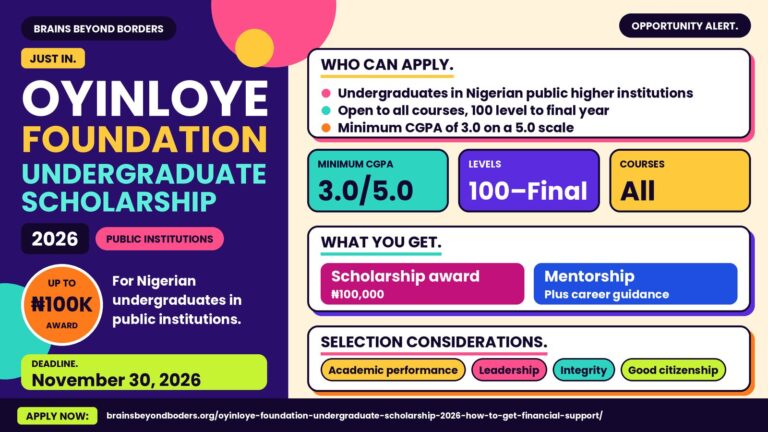 ScholarshipsOyinloye Foundation Undergraduate Scholarship 2026: How to Get ₦100,000 in Financial Support.Nov 21, 2026
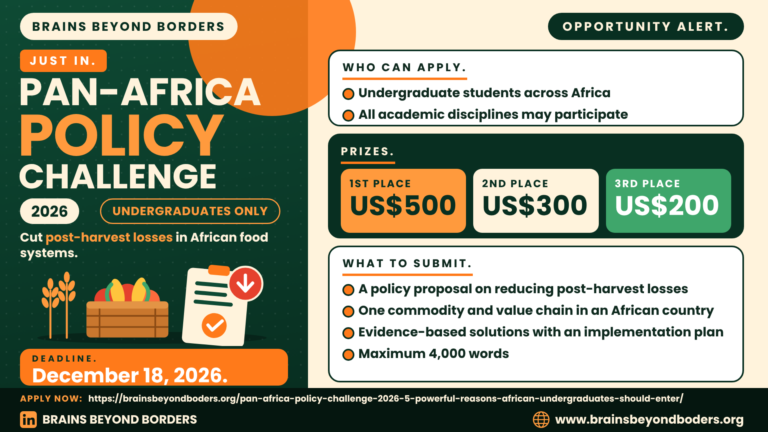 DuelsPan-Africa Policy Challenge 2026: 5 Powerful Reasons African Undergraduates Should Enter.Nov 21, 2026
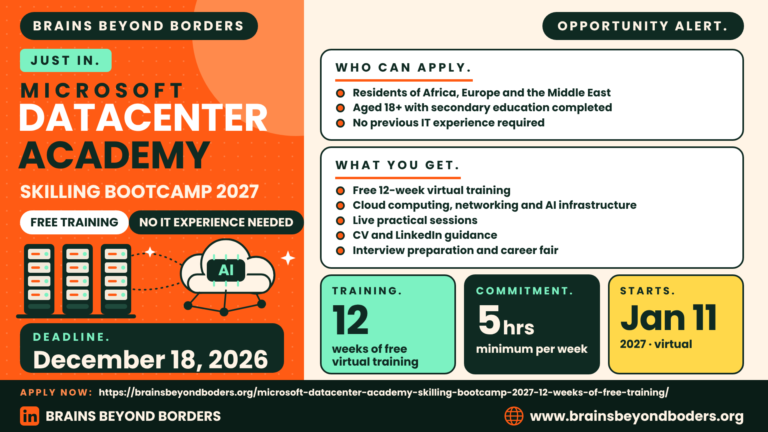 AI ToolsMicrosoft Datacenter Academy Skilling Bootcamp 2027: 12 Weeks of Free Training in Cloud Computing, AI Infrastructure and Networking.Nov 20, 2026
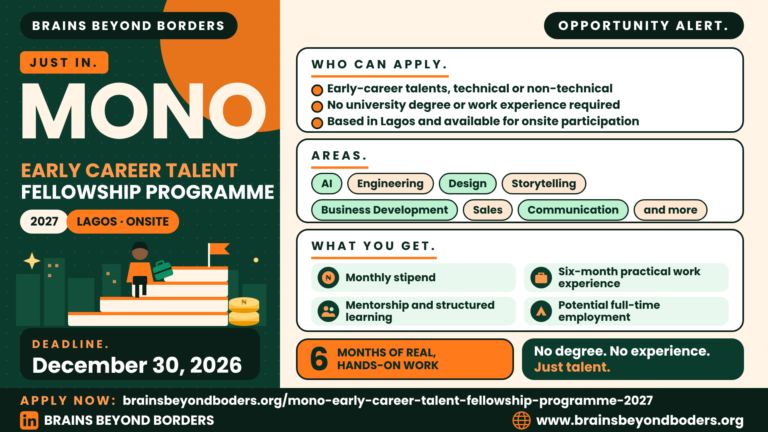 FellowshipsMono Early Career Talent Fellowship Programme 2027: Apply for a 6-Month Fellowship with Monthly Stipend in Lagos.Nov 20, 2026
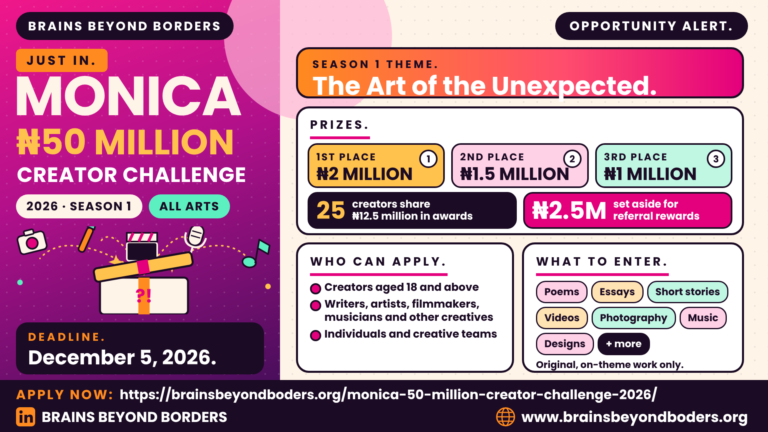 DuelsMonica ₦50 Million Creator Challenge 2026: The Guide for You to Apply and Win .Nov 20, 2026
 ScholarshipsDe_Light Foundation Undergraduate Scholarship 2026: Financial Support and Mentorship for Nigerian Students.Nov 18, 2026
• STEP 8: SUBMIT BEFORE THE DEADLINE
Applications close on October 23, 2026.
APPLICATION DEADLINE
OCTOBER 23, 2026.
The official Grooming Centre grant website currently lists the 2026 application window as August 31 to October 23, 2026.
OFFICIAL APPLICATION PORTAL
Applications should be submitted through the official Grooming Centre University Grant application portal.
IMPORTANT NOTES FOR APPLICANTS
1. This is a research grant, not a general scholarship. The funding is intended to support qualifying academic research.
2. The ₦20 million is the total pool.It is not ₦20 million per student.
3. Undergraduate eligibility is specifically described as final-year for the 2026 cycle. Postgraduate students are also eligible where their research meets the requirements.
4. Your research topic matters. Being a Nigerian student alone does not make a research project eligible. The study must align with the programme’s focus and demonstrate relevance, practicality, innovation and originality.
5. A supervisor’s recommendation is required. Do not leave this until the application deadline.
6. The proposal has detailed formatting requirements. The live application page currently specifies 10–15 pages for the proposal, while the broader requirements page contains a 10–20-page statement. Follow the live application form’s current upload requirement unless the organisers update it.
7. There is no stated age, gender, religious or ethnic restriction.
The official requirements explicitly state this.
KEY DETAILS AT A GLANCE
• Programme: Grooming Centre University Research Grant 2026.
• Organiser: Grooming People for Better Livelihood Centre (Grooming Centre).
• Managed by: Centre for Research in Enterprise and Action in Management (CREM).
• Country: Nigeria.
• Eligible applicants: Final-year undergraduate and postgraduate students.
• Eligible institutions: NUC/NBTE-approved Nigerian universities or polytechnics.
• Total grant pool: ₦20 million.
• Undergraduate award: ₦100,000 each.
• Postgraduate award: ₦200,000 each.
• Expected beneficiaries: 100 undergraduates + 50 postgraduates.
• Research focus: Financial inclusion, microfinance, rural development, social enterprise, MSMEs, technology, digital finance, youth development, women in development and poverty reduction.
• Supervisor recommendation: Required.
• Research proposal: 10–15 pages on the live application form.
• Personal profile: Maximum 2 pages.
• Application opens: August 31, 2026.
• Deadline: October 23, 2026.
• Application fee: No fee stated by the official programme.
• Access The Official application Link HERE.
[bbp_banner]